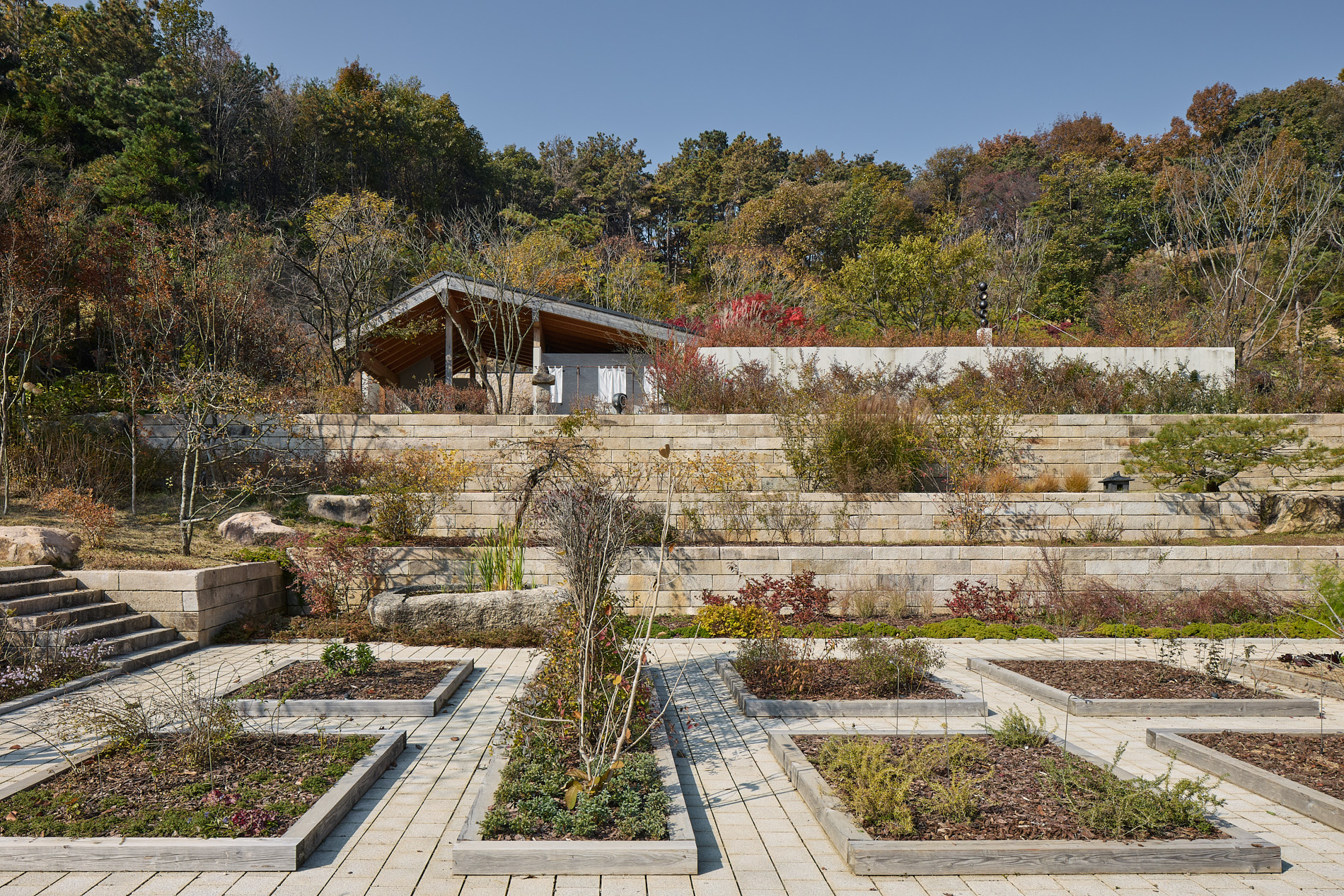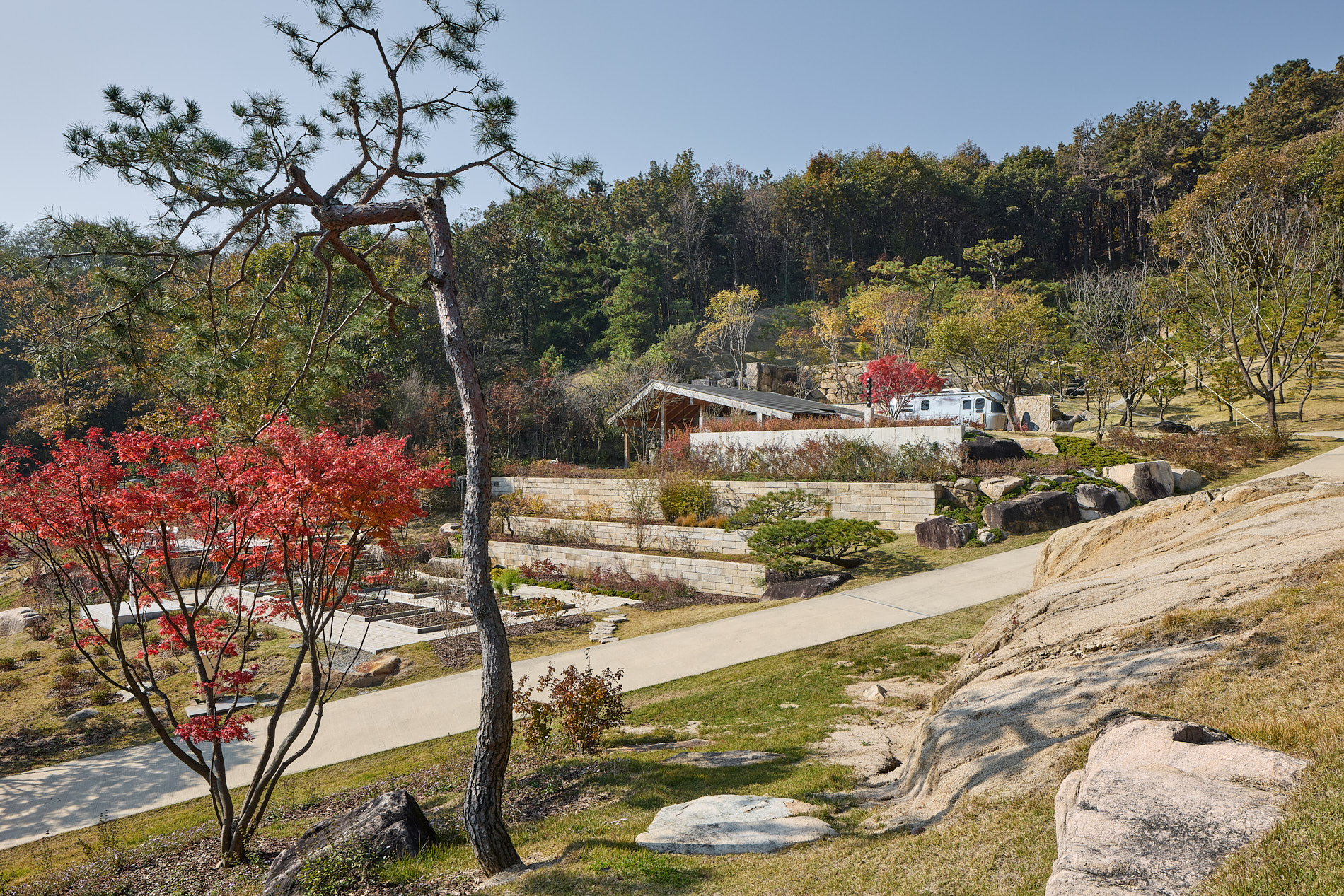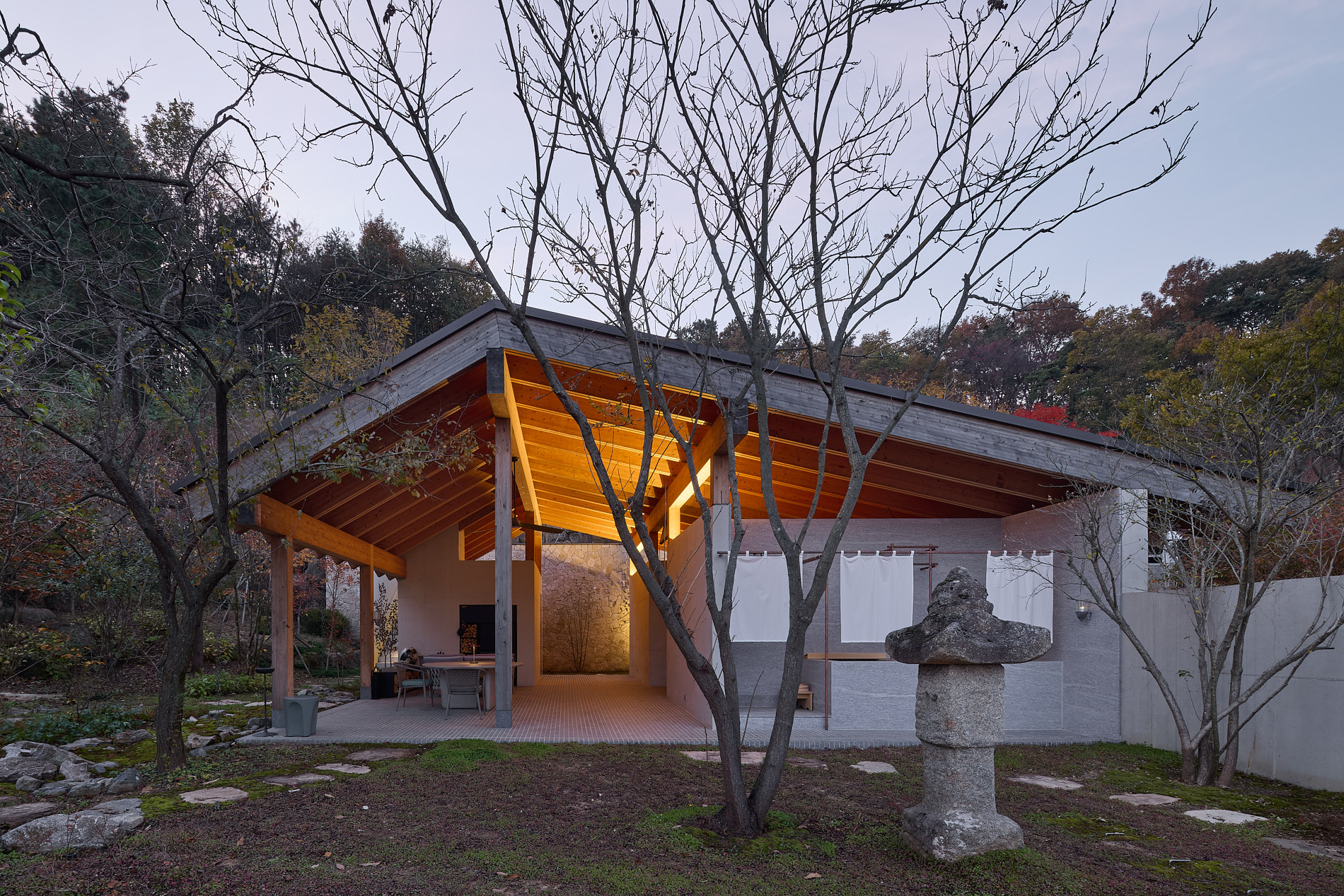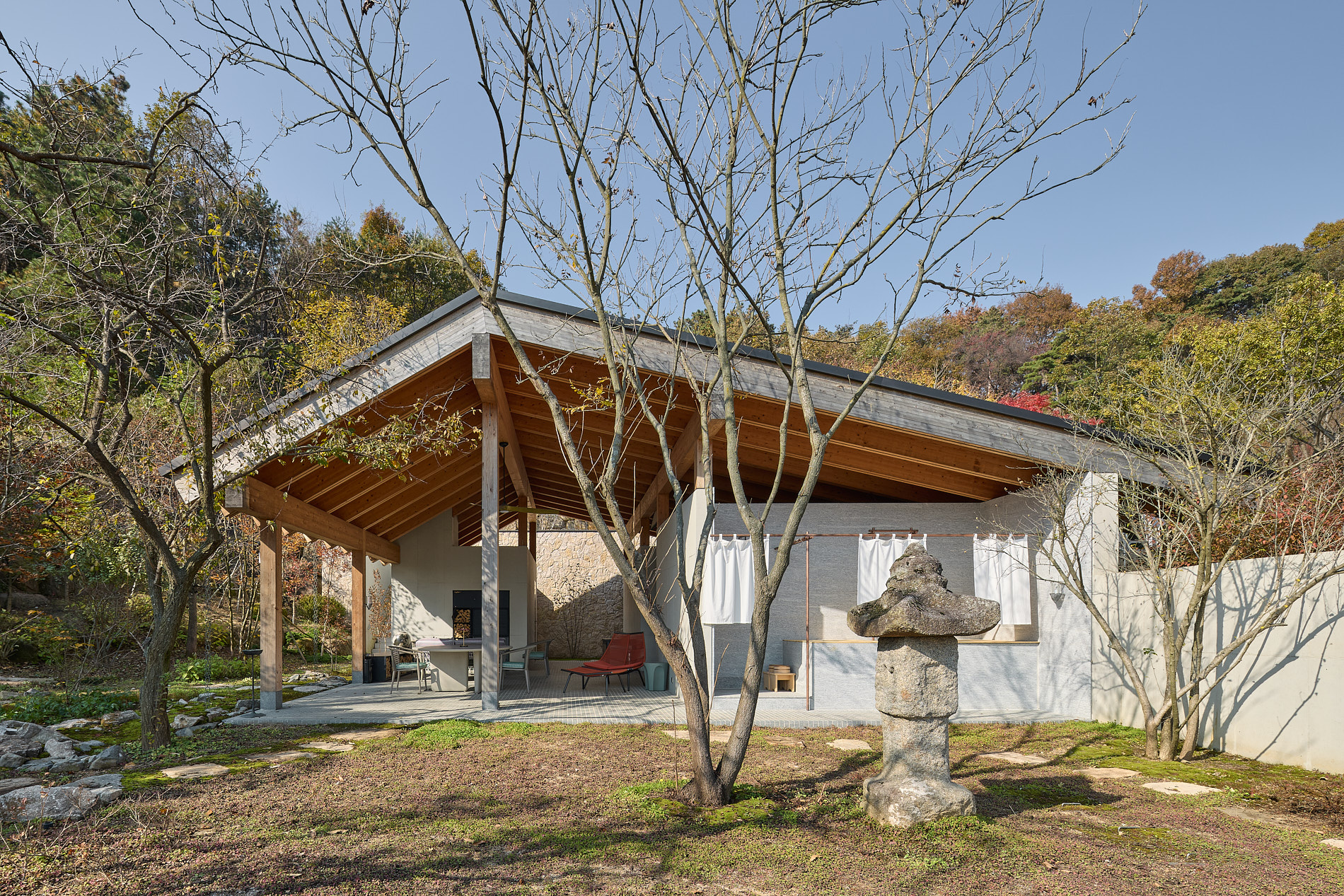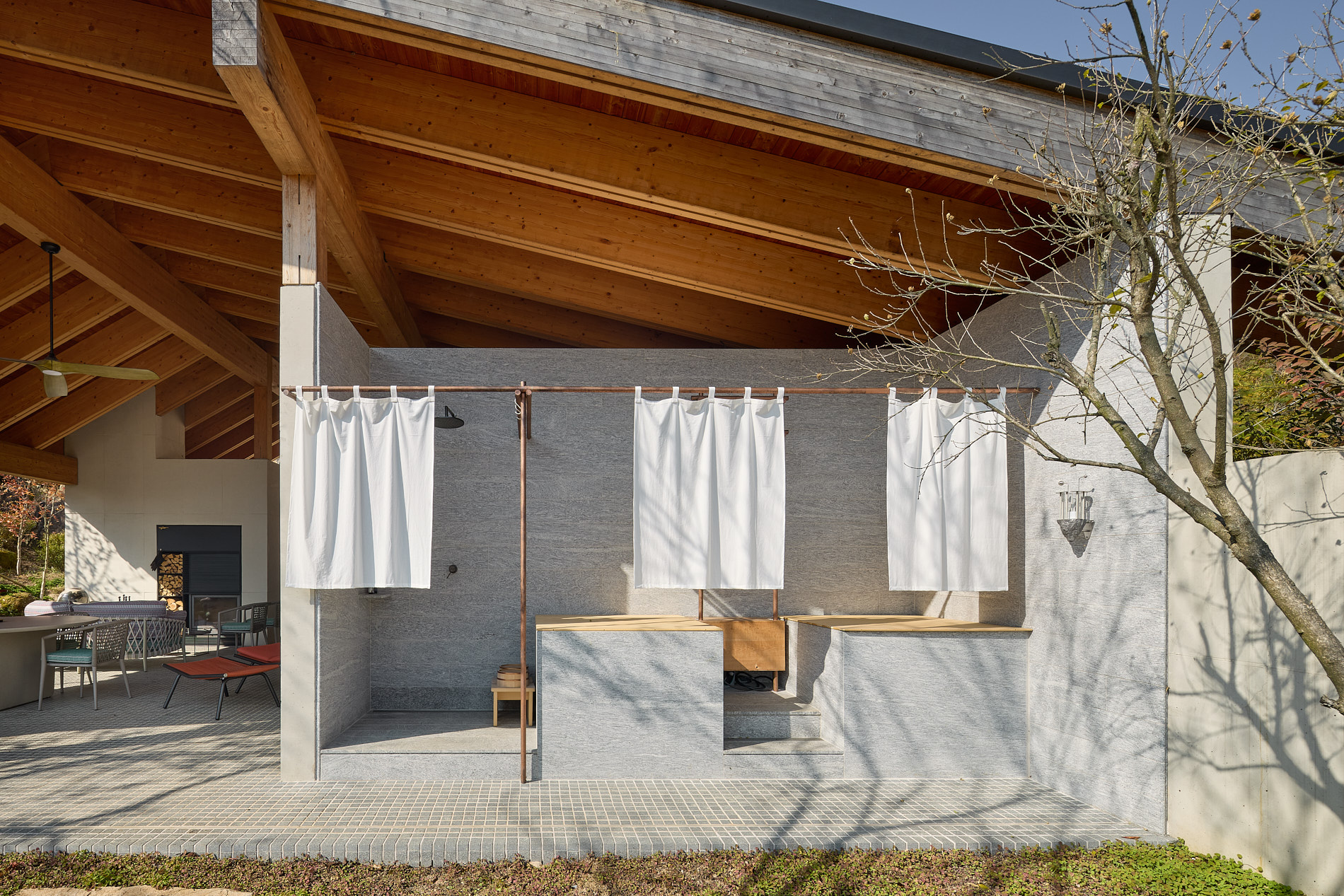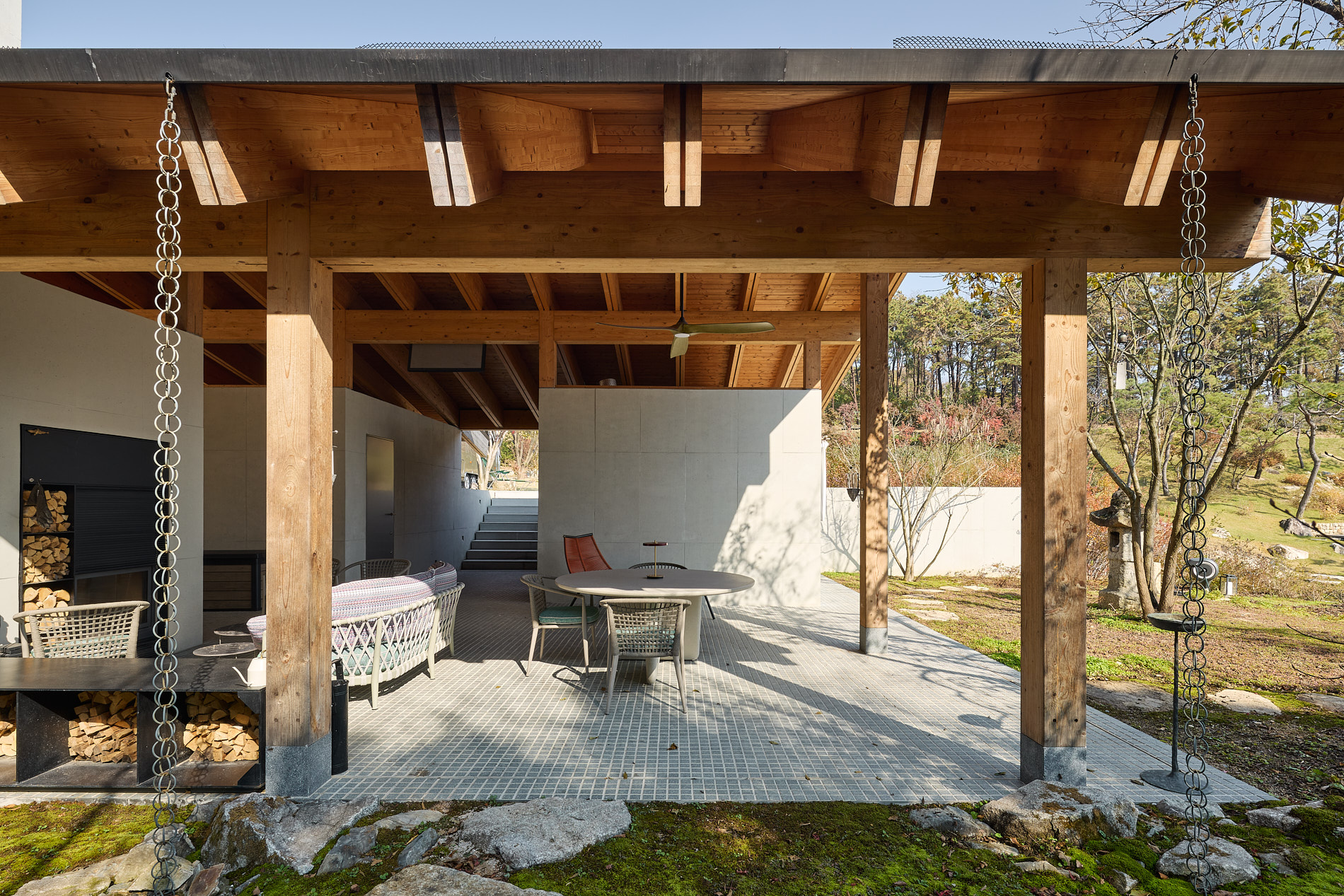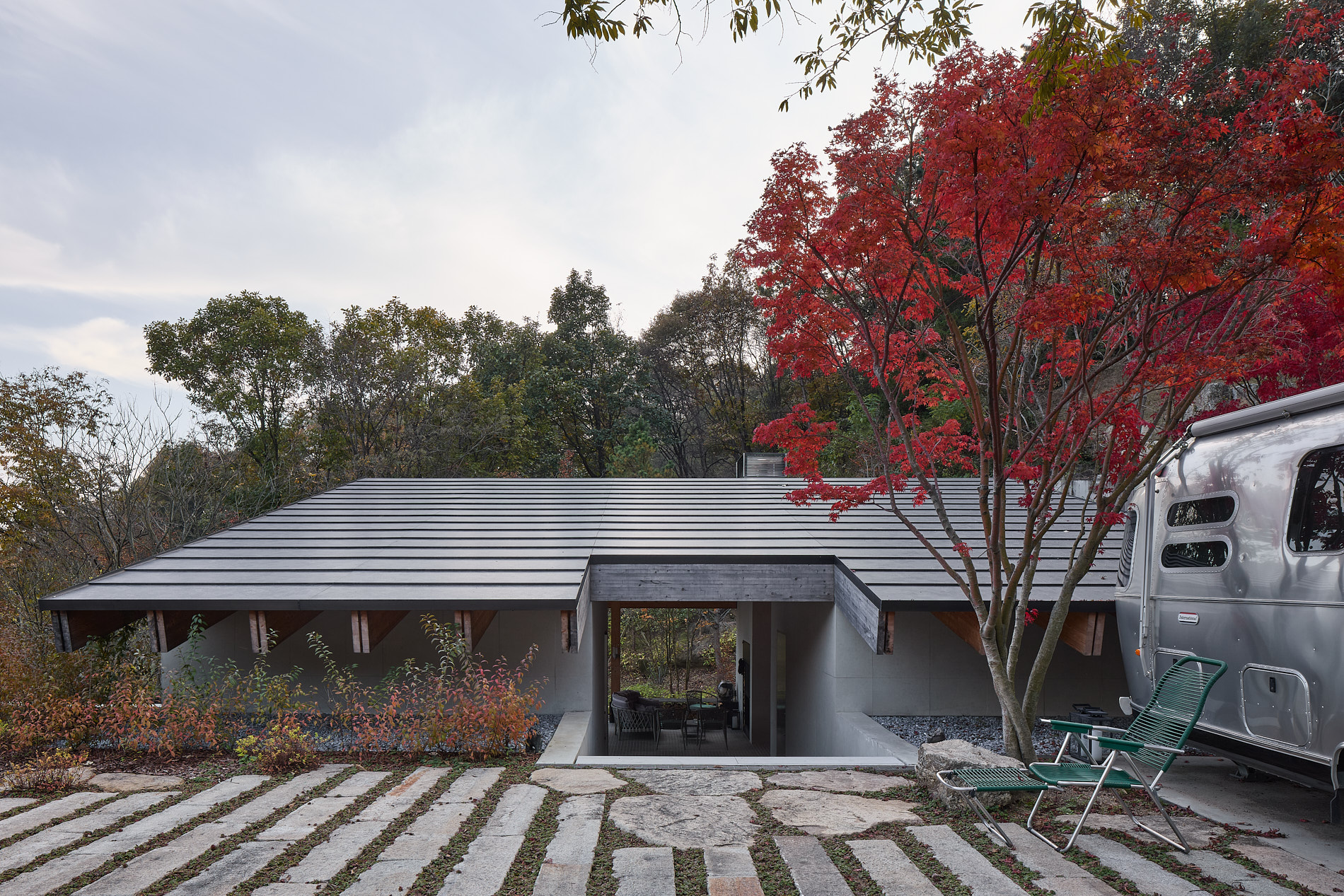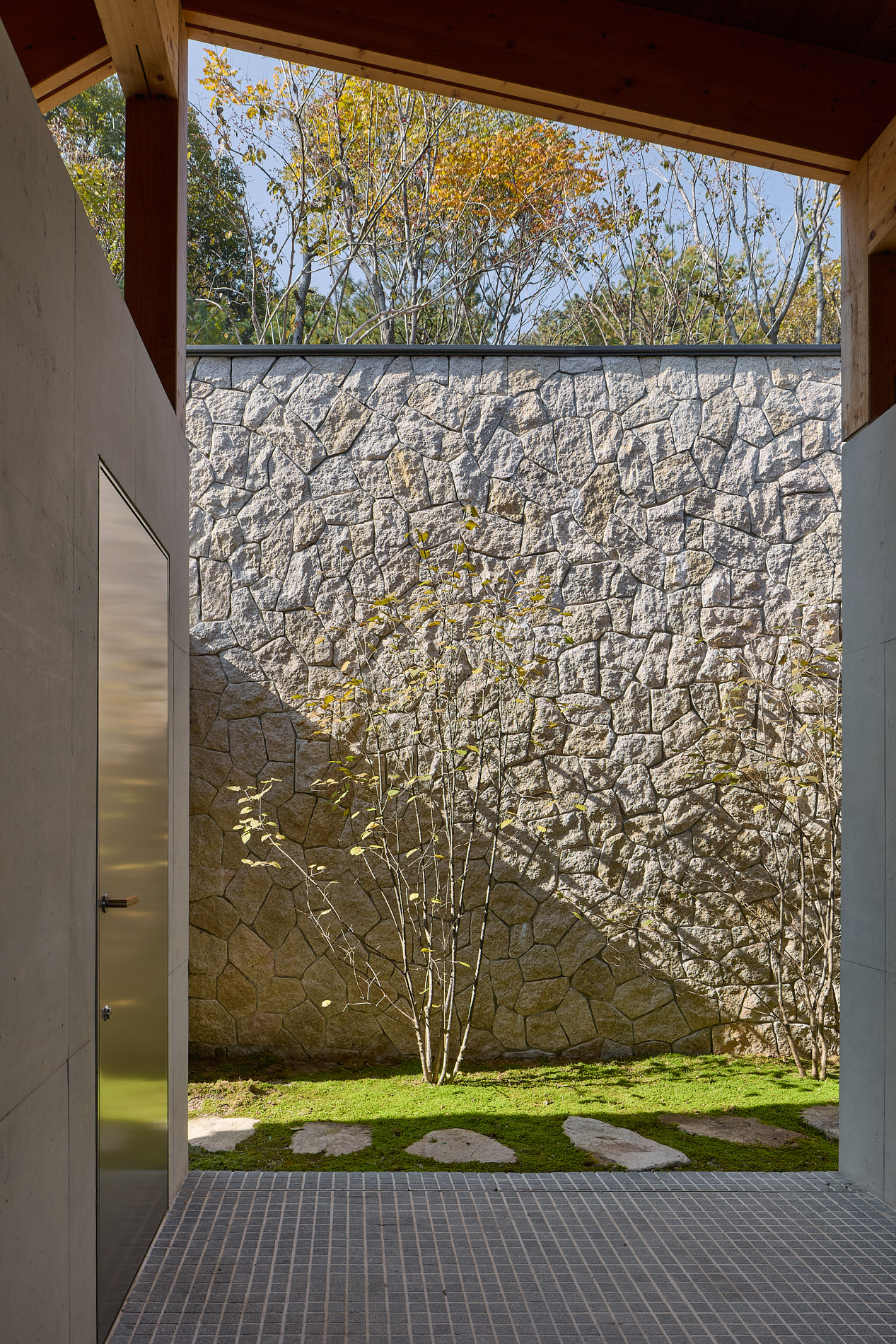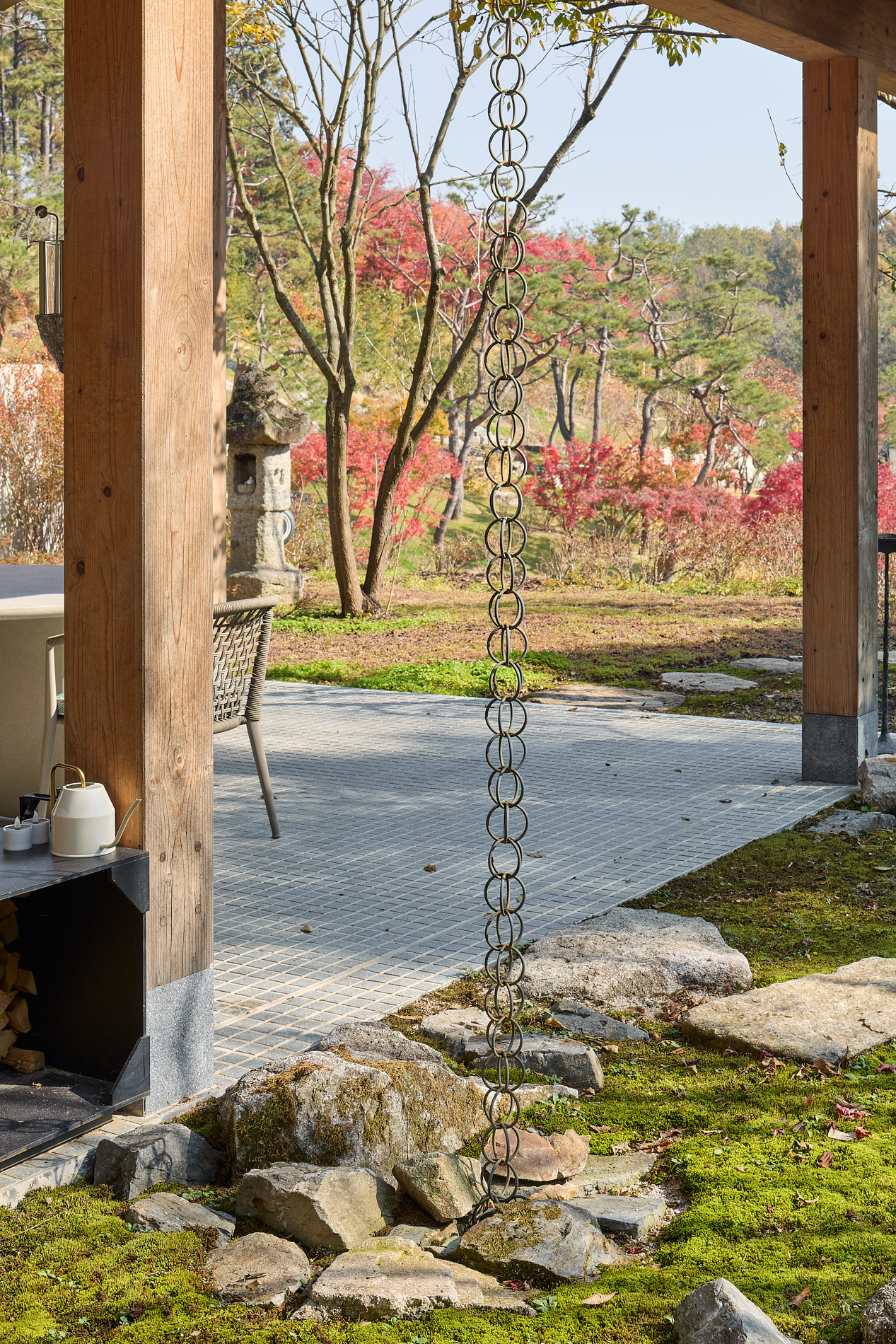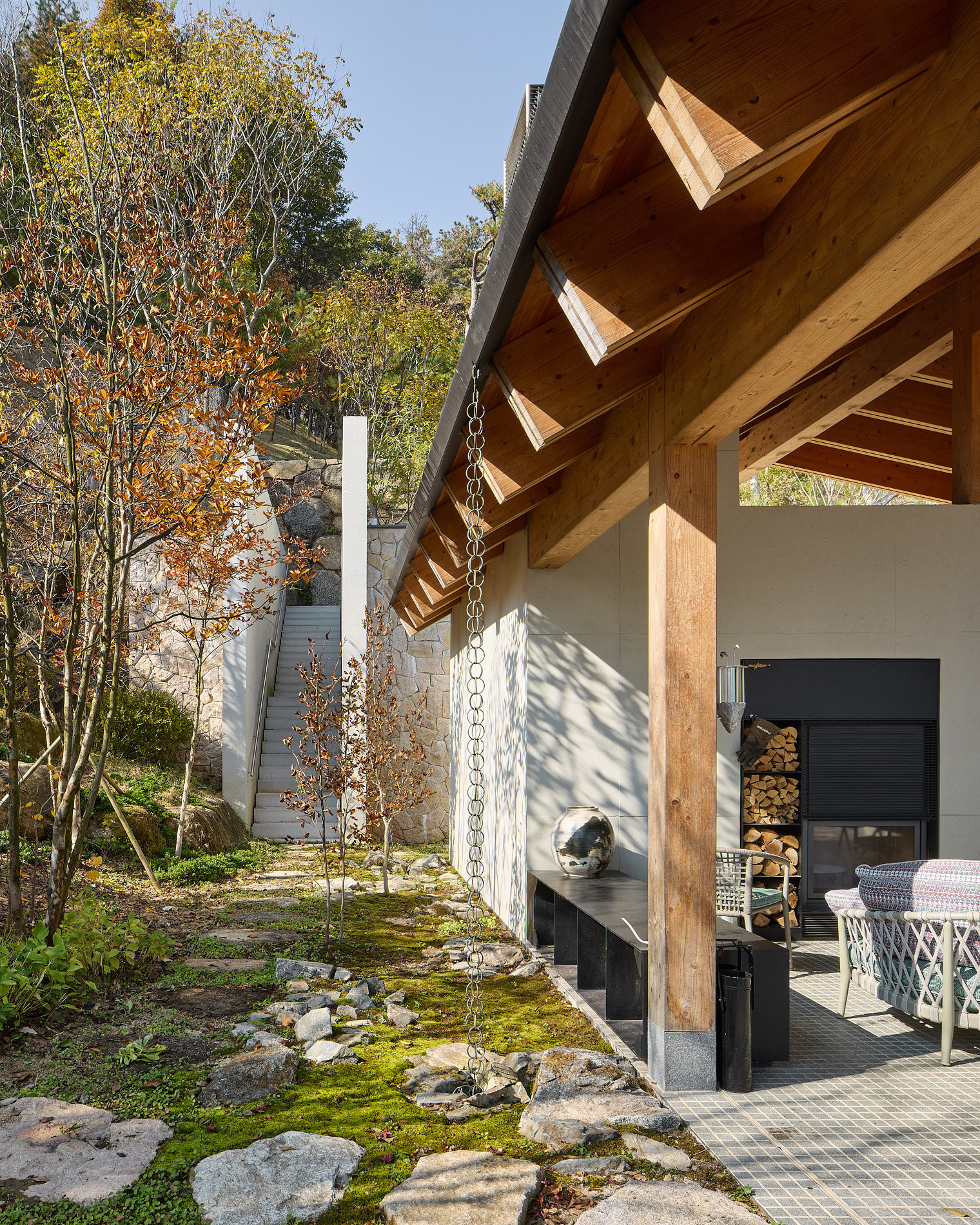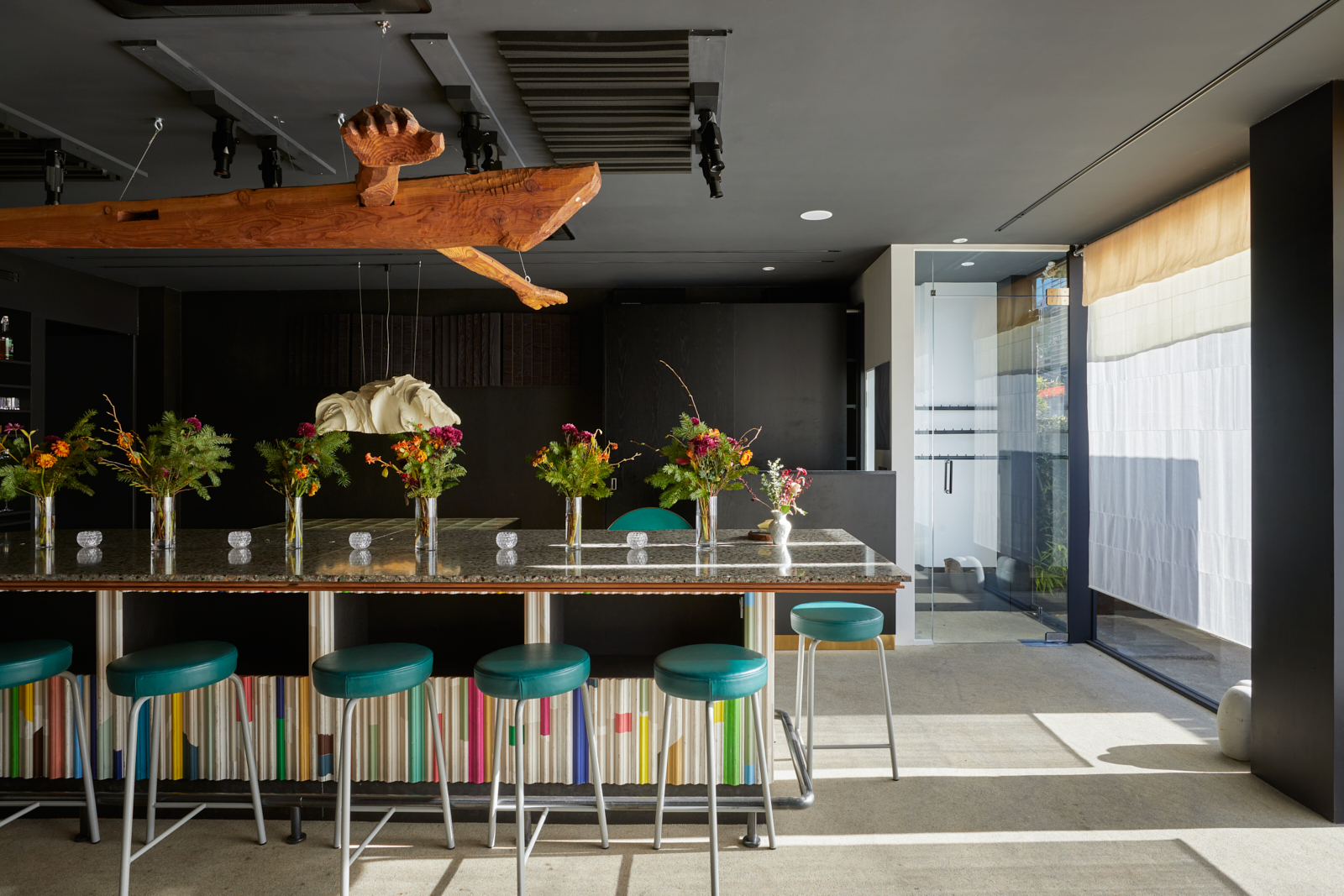
묘재(妙齋)는 오묘할 묘, 서재 재를 가져와 뜻을 올렸습니다. “오묘한 서재”, “아름답고 깊은 뜻을 지닌 공간”, “정갈하게 마음을 가다듬는 방” 정도로 볼 수 있습니다. 옥구정원에 위치한 이 작은 서재는 소담스러운 서재, 파이어핏과 정원 전체를 내려다볼 수 있는 프라이빗 온천으로 구성되었습니다. 2인이 사용할 수 있도록 계획된 온천은 돌과 동을 주요 재료로 사용해 물과 시간의 흔적이 자연스럽게 축적되도록 의도했습니다. 무게감 있는 재료와 섬세한 디테일이 대비를 이루며, 공간은 작지만 강한 밀도를 가집니다. 묘재라는 이름답게 정신적 수양과 사유의 공간으로 자리매김합니다.
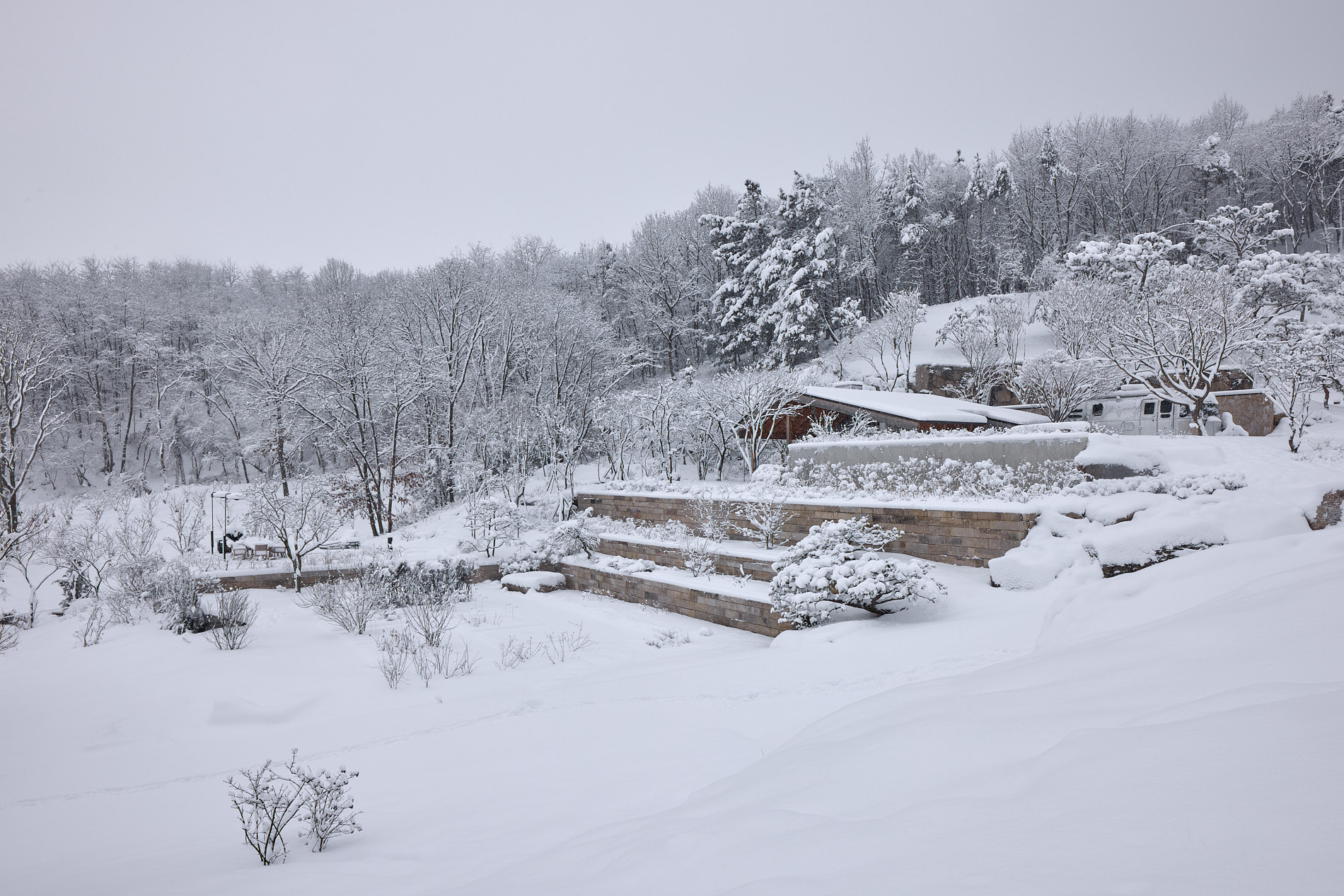
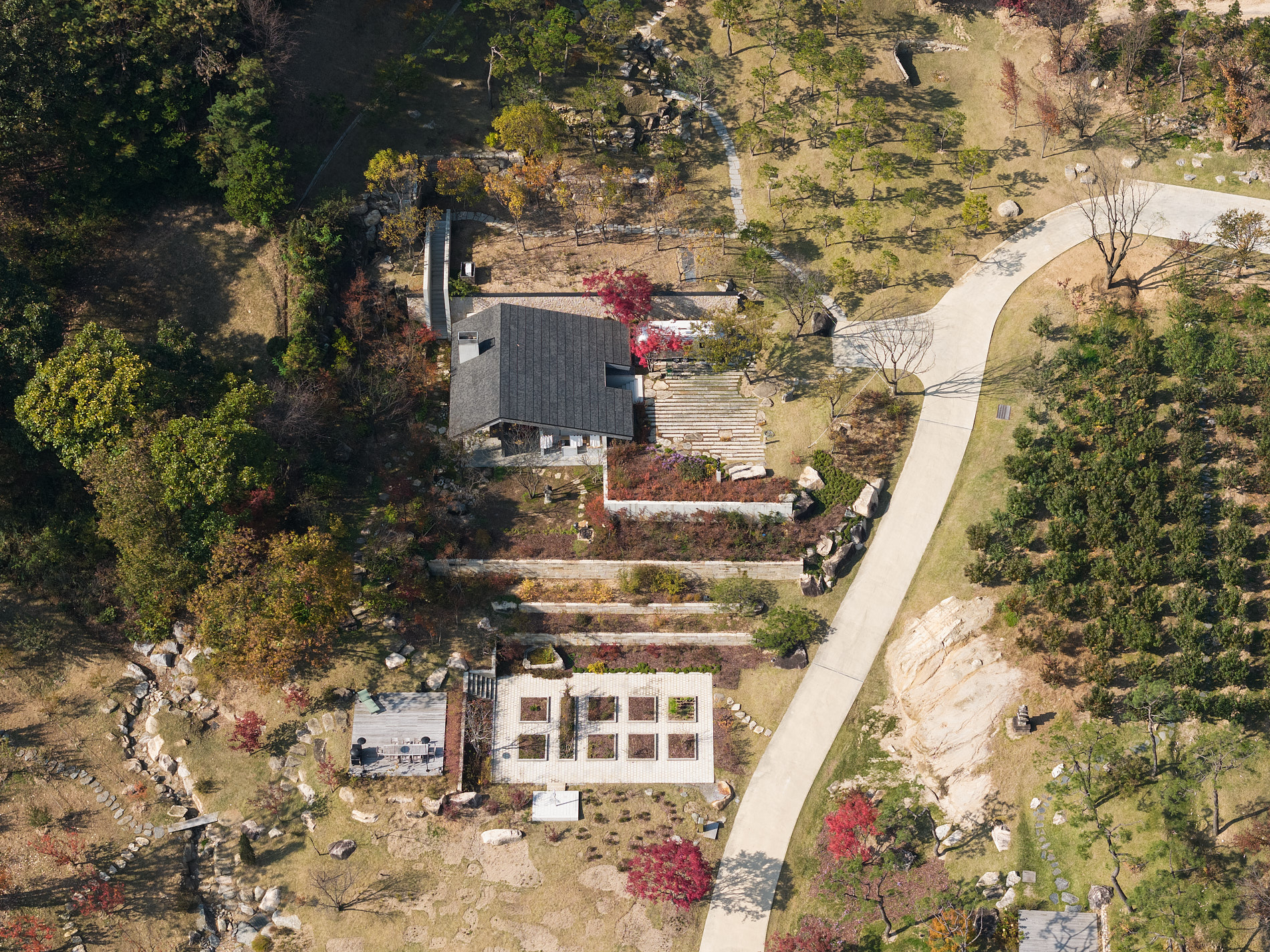
* 양평에 위치한 옥구정원은 섬세하게 설계된 프라이빗 리조트로 럭셔리 레지던스와 오픈 홀로 이루어져 있습니다. 옥구정원은 개인의 취향과 자연 환경을 장기적으로 조율해 완성한 마스터플랜 프로젝트입니다. 대상지 선정 단계부터 건축사가 함께 참여하여 땅의 내음과 형상과 지형, 주변 바람의 풍경을 읽는 과정에서부터 설계가 시작되었기에 이 공간은 단순한 건축이 아니라 ‘땅을 다루는 방식’ 에서부터 출발한 프로젝트라 할 수 있습니다. 옥구정원은 모든 건축물과 정원이 느슨하게 연결되면서도 필요에 따라 독립성을 유지하도록 계획되었습니다. 내부와 외부는 자연스럽게 이어져 계절의 변화가 직접적으로 공간 경험에 스며듭니다. 봄의 새순, 여름의 짙은 녹음, 가을의 색 변화, 그리고 겨울의 정적까지 자연의 흐름이 빠짐없이 공간을 통과합니다. 옥구정원은 특정 계절에만 완성되는 장소가 아니라 사계절 내내 다른 표정을 보여주는 리조트로 한 사람의 삶과 풍경이 함께 쌓여가는 시간을 건축으로 드러내고 있습니다.
Myojae (妙齋) combines the characters for “subtle and profound” (myo) and “study” (jae), suggesting meanings such as “a refined and contemplative study,” “a space imbued with quiet beauty and depth,” or “a room where one gathers and composes the mind with clarity.” Located within Okgugarden, this intimate retreat is composed of a modest study, a fire pit, and a private hot spring that overlooks the entire garden. Designed for two guests, the bath is constructed primarily of stone and copper, allowing traces of water and time to accumulate naturally on its surfaces. The contrast between the weight of the materials and the delicacy of the details creates a space that is small in scale yet rich in density. True to its name, Myojae establishes itself as a place for contemplation, discipline, and inner reflection.
* Located in Yangpyeong, Okgugarden is a meticulously designed private resort composed of luxury residences and an open hall. It is a masterplan project that has been carefully shaped over time through a thoughtful alignment of personal sensibilities and the natural environment. From the earliest stages of site selection, the architect was involved in reading the land—its scent, form, topography, and the movement of surrounding winds—so that the design began not simply as an act of building, but as a way of engaging with the land itself. Within Okgugarden, each structure and garden is loosely connected while maintaining independence when needed. The boundaries between interior and exterior dissolve, allowing the changing seasons to permeate the spatial experience directly. The fresh shoots of spring, the dense greenery of summer, the shifting colors of autumn, and the stillness of winter all pass through the space without omission. Rather than being defined by a single season, Okgugarden reveals a different expression throughout the year—an architectural landscape where time, life, and scenery quietly accumulate together.