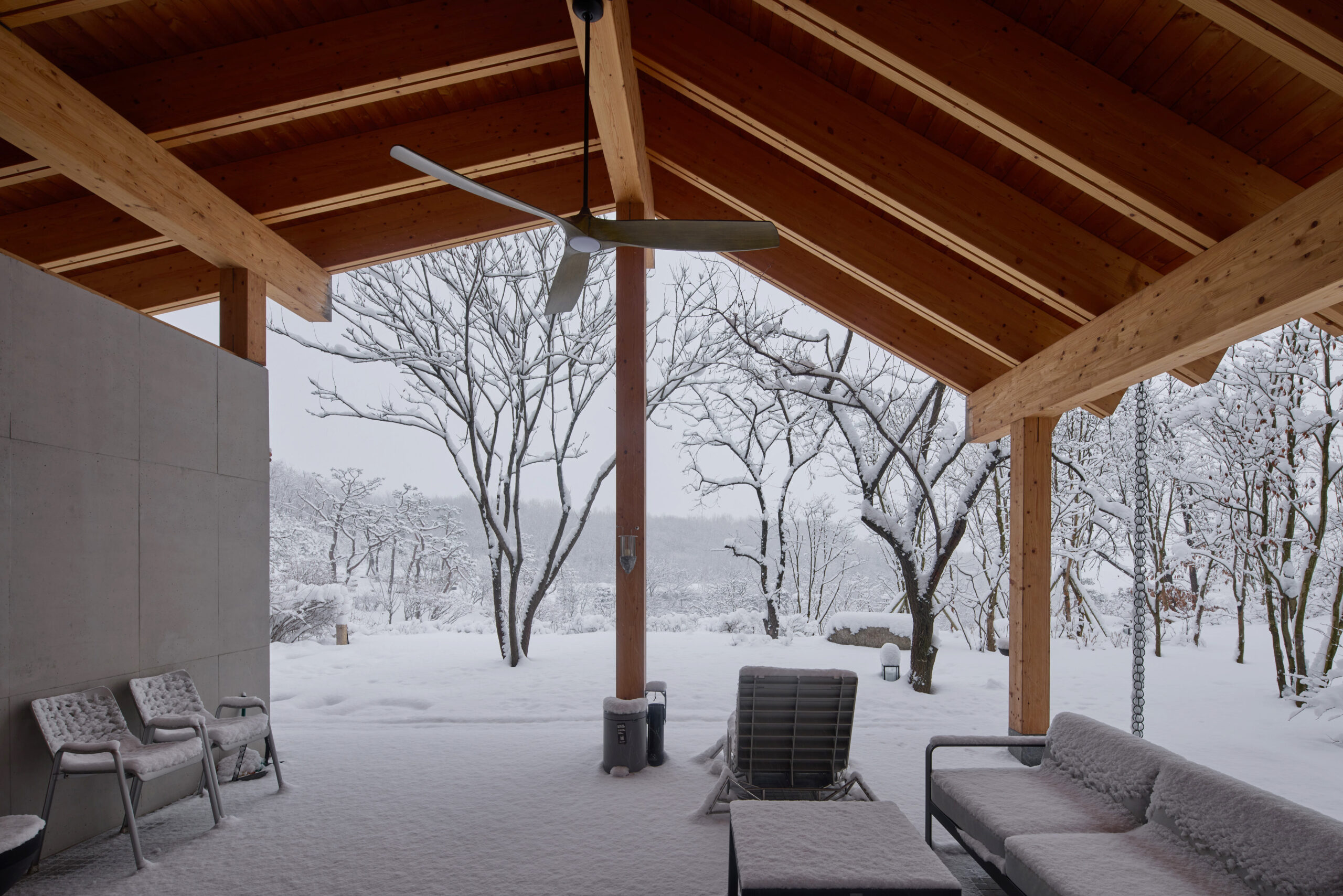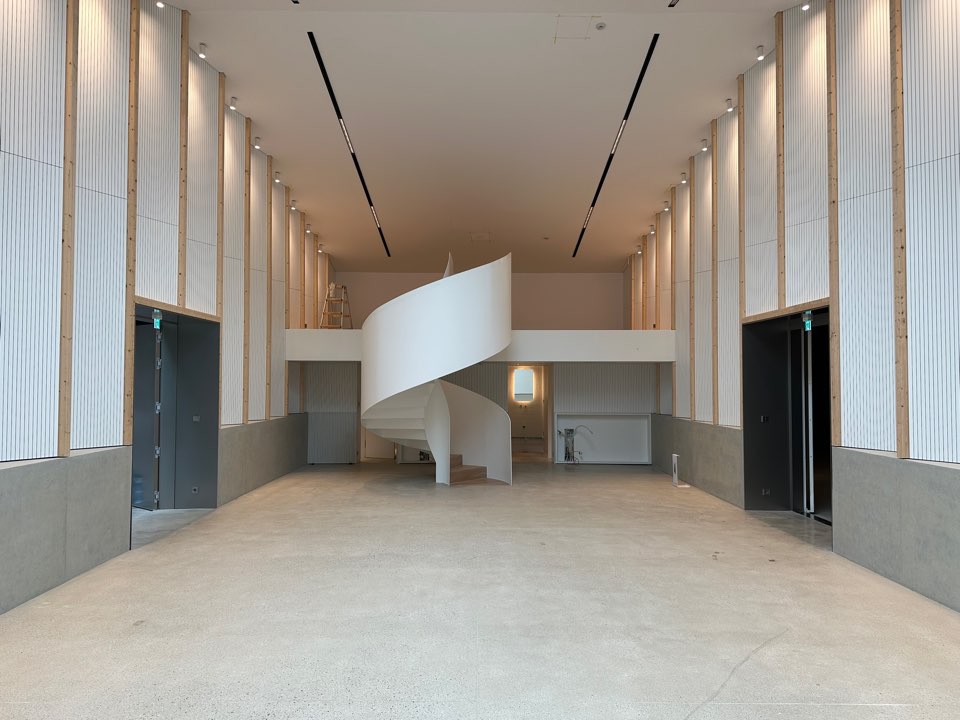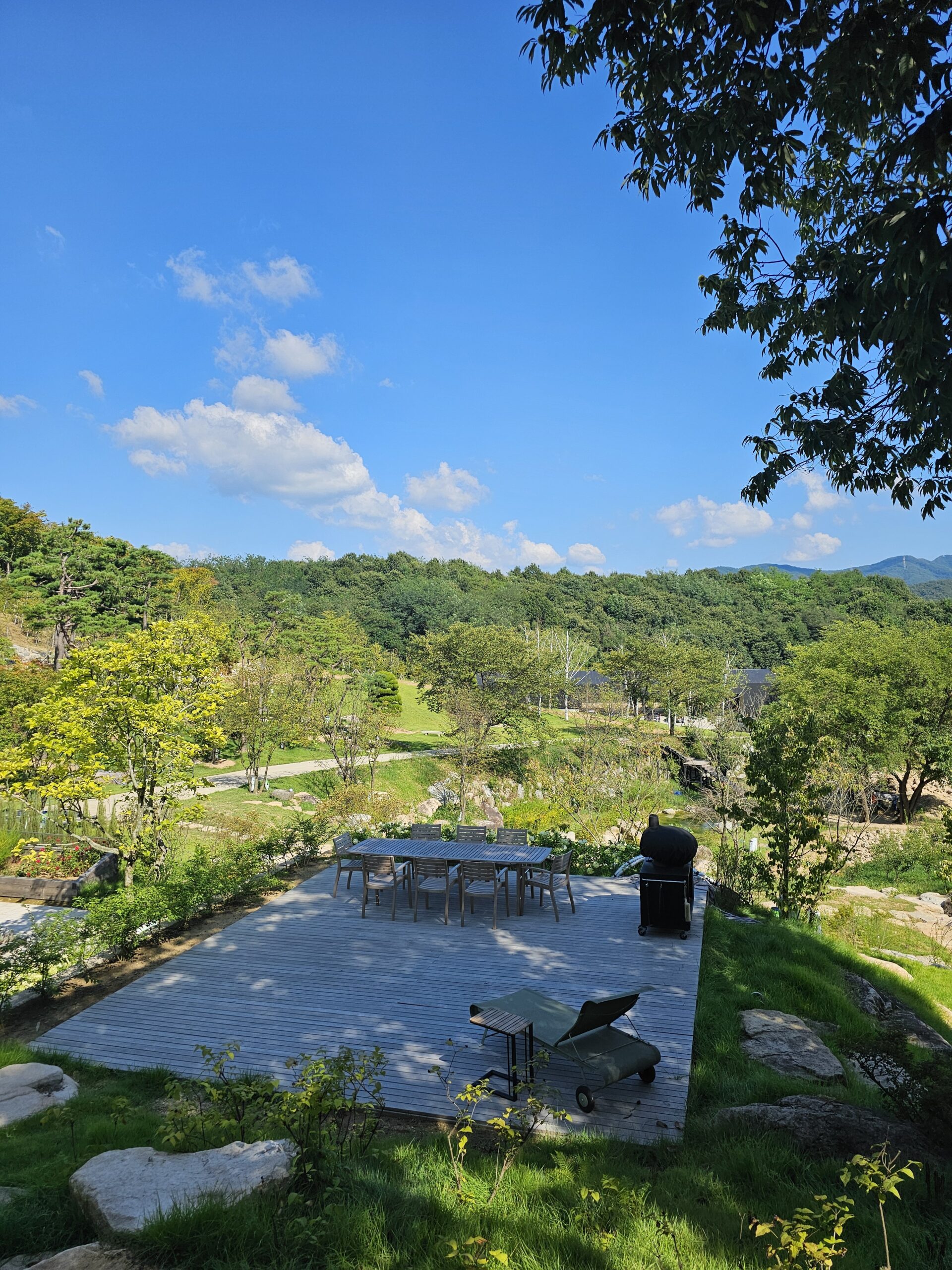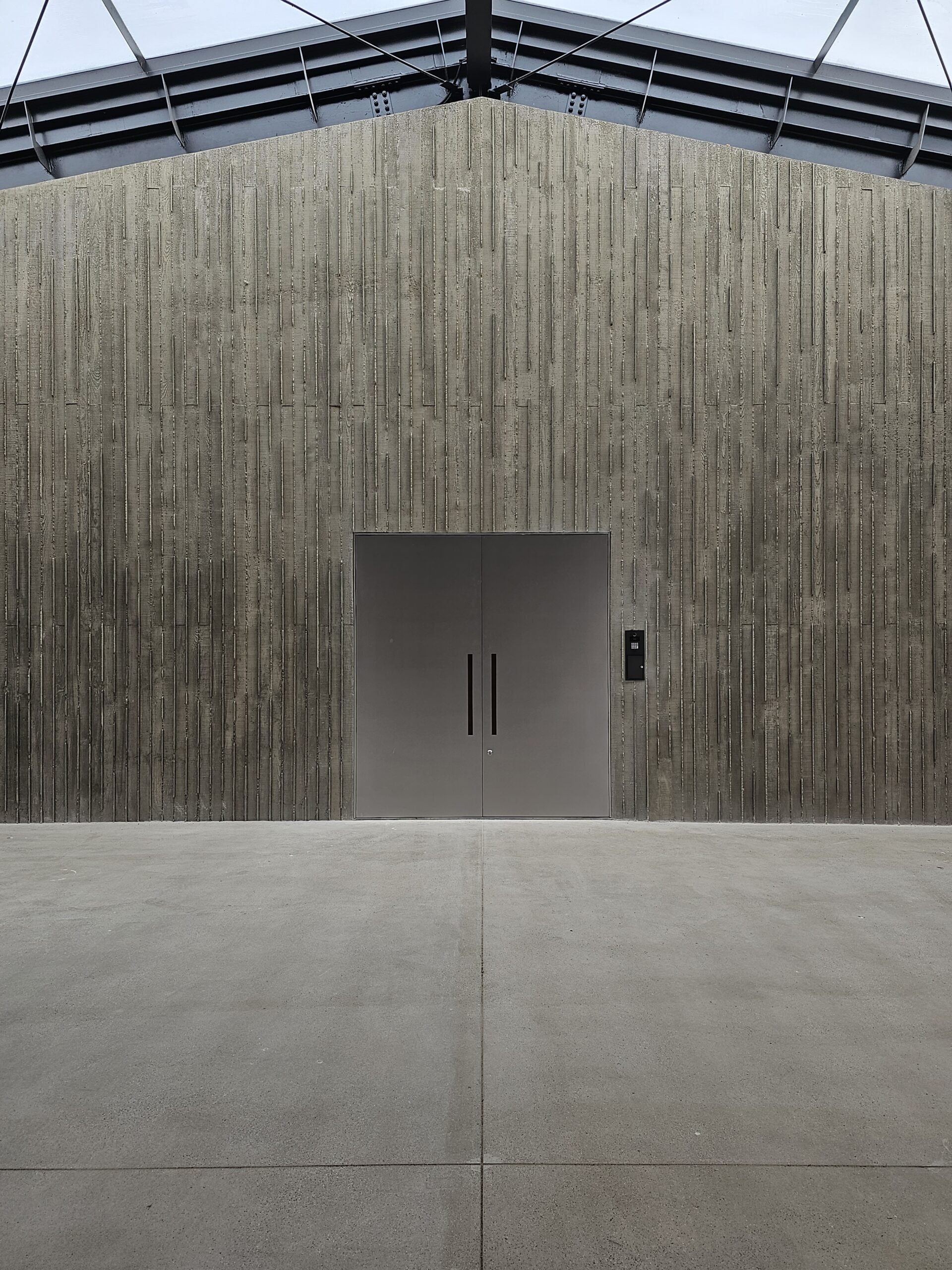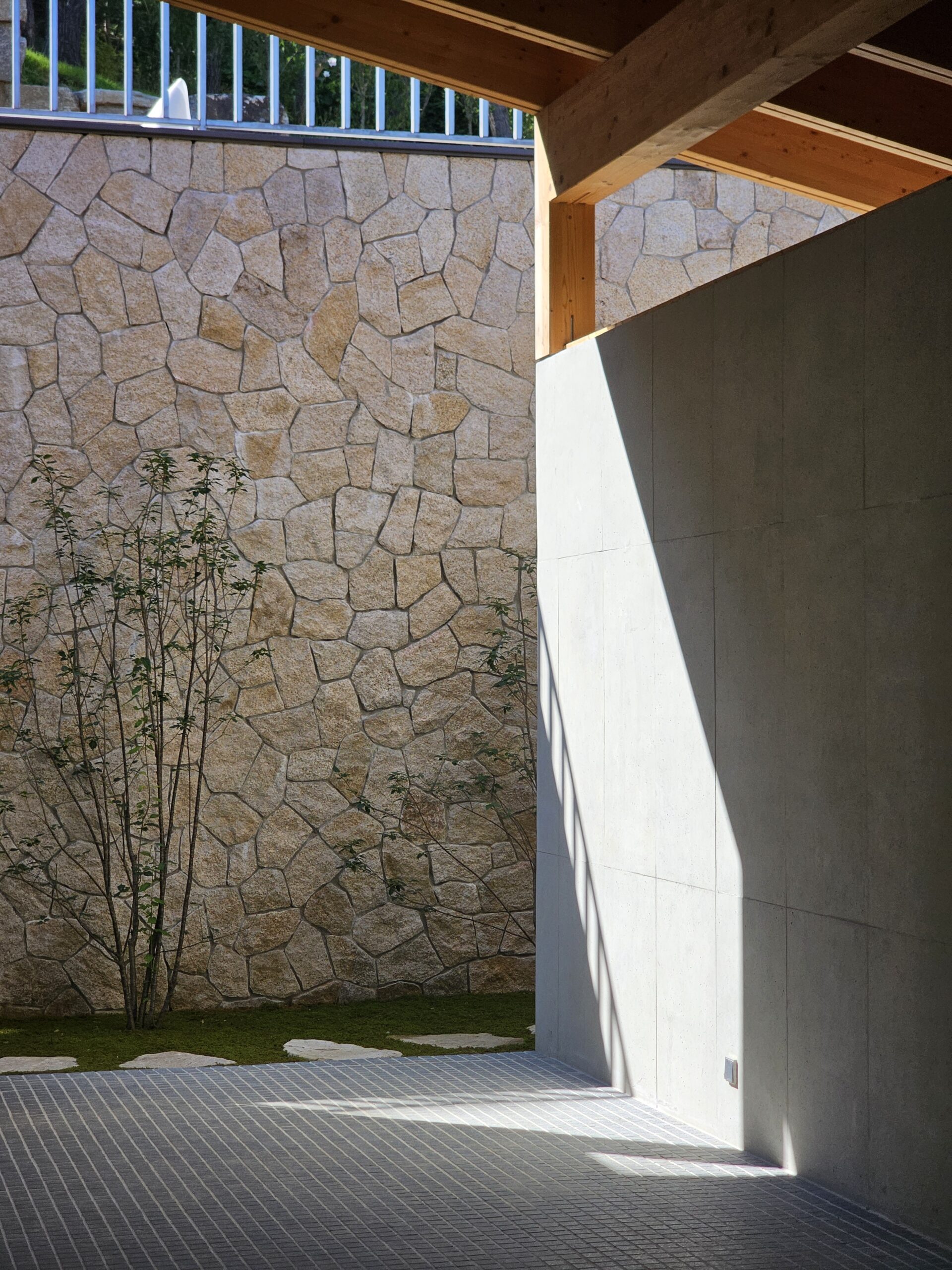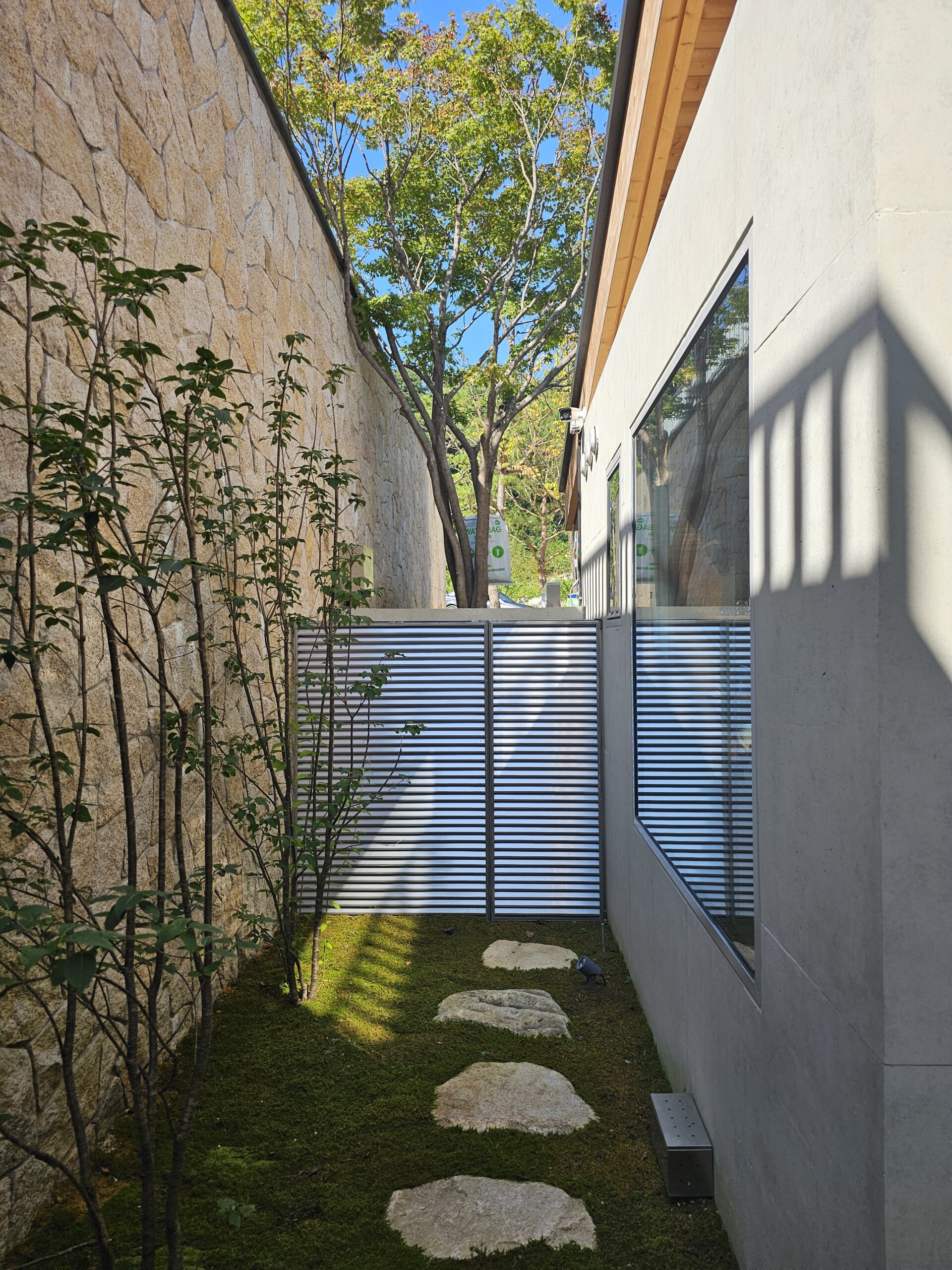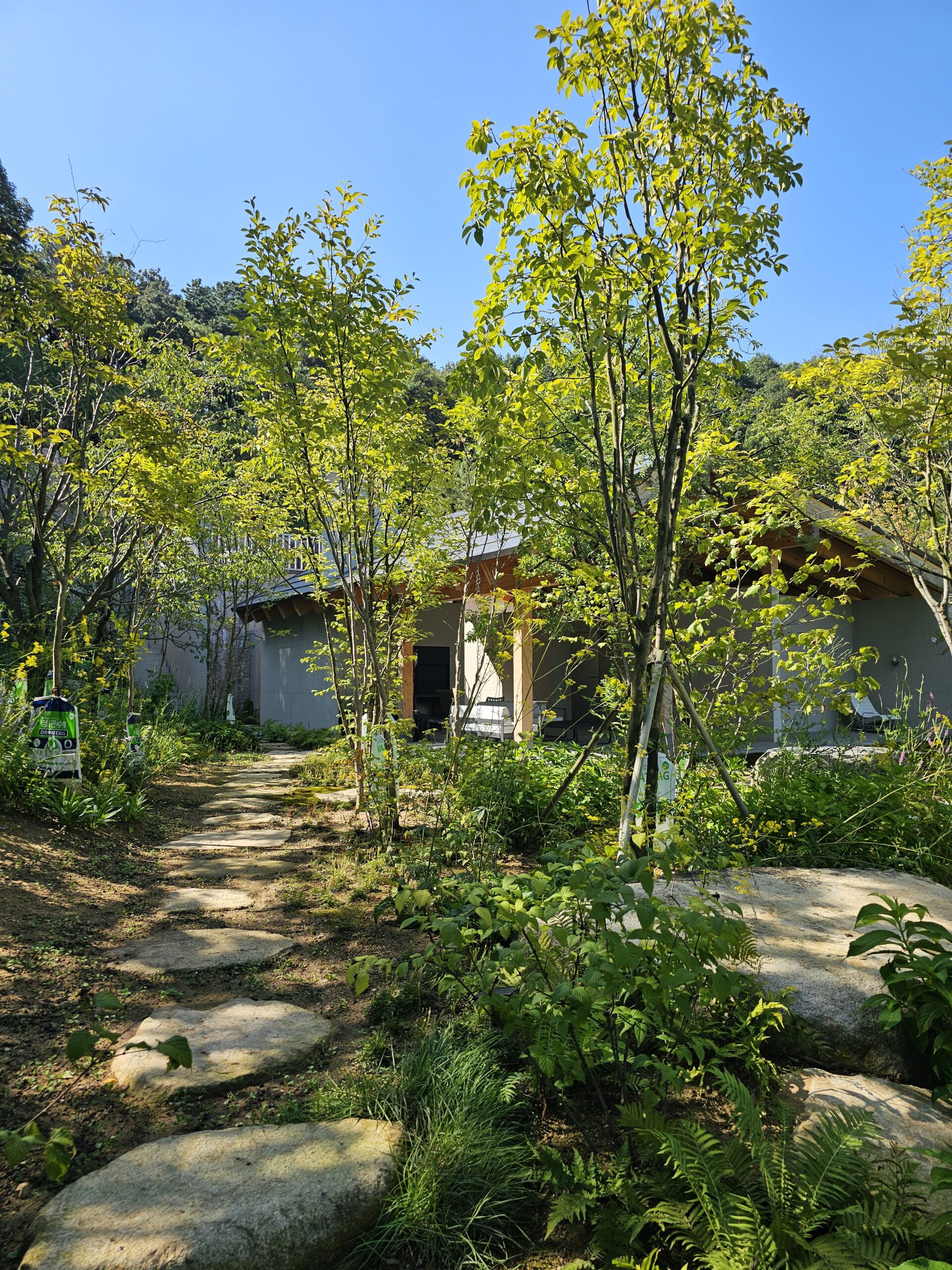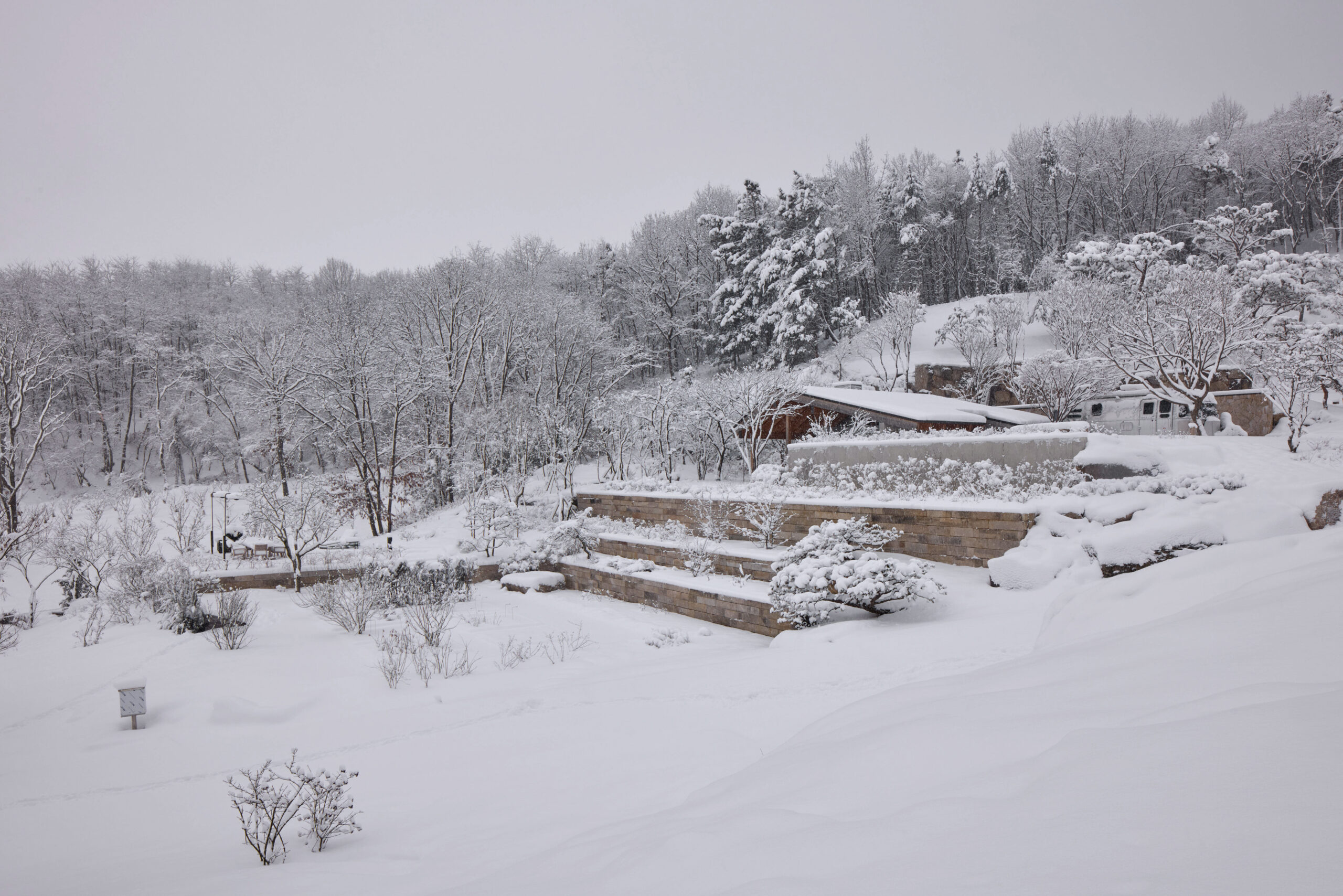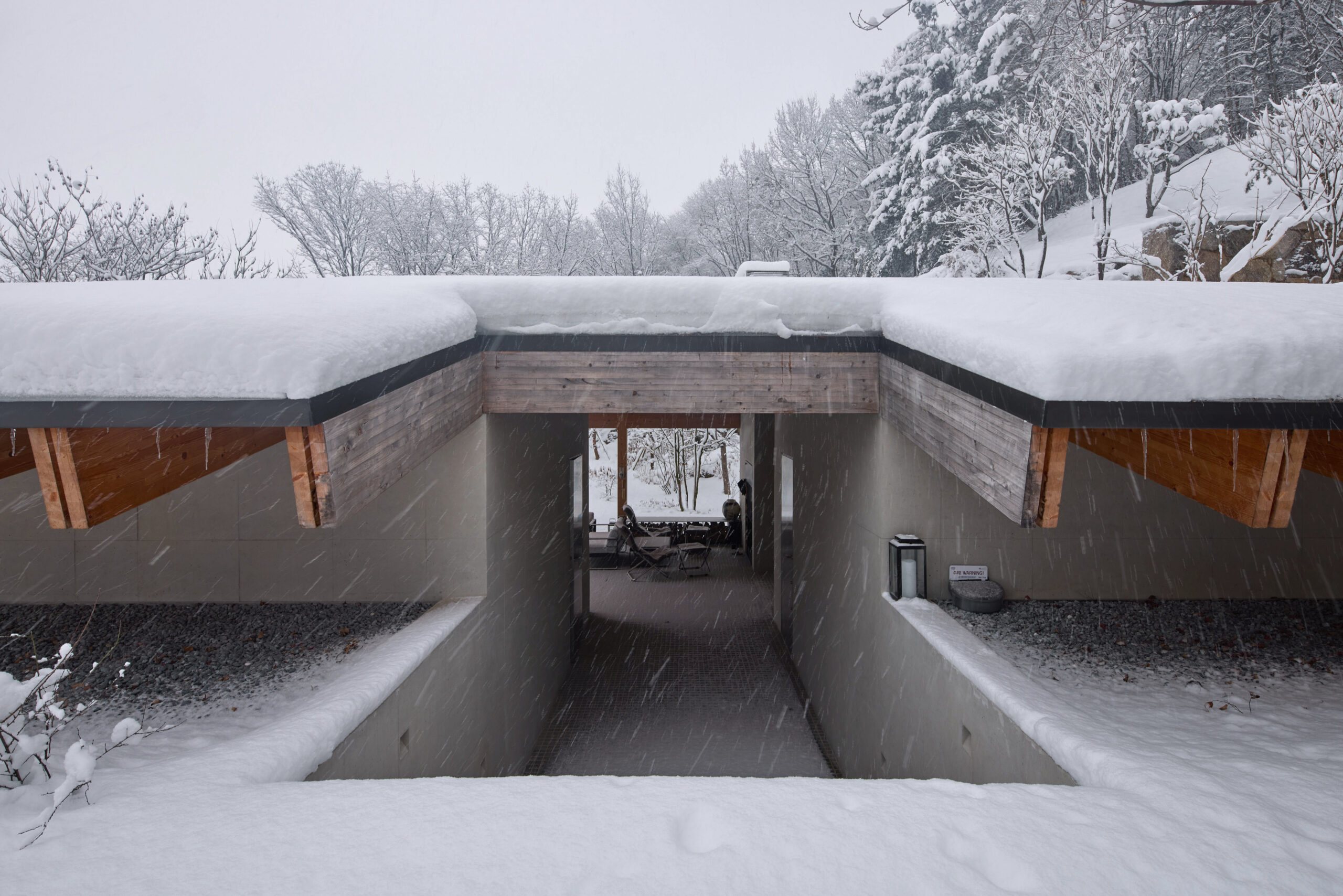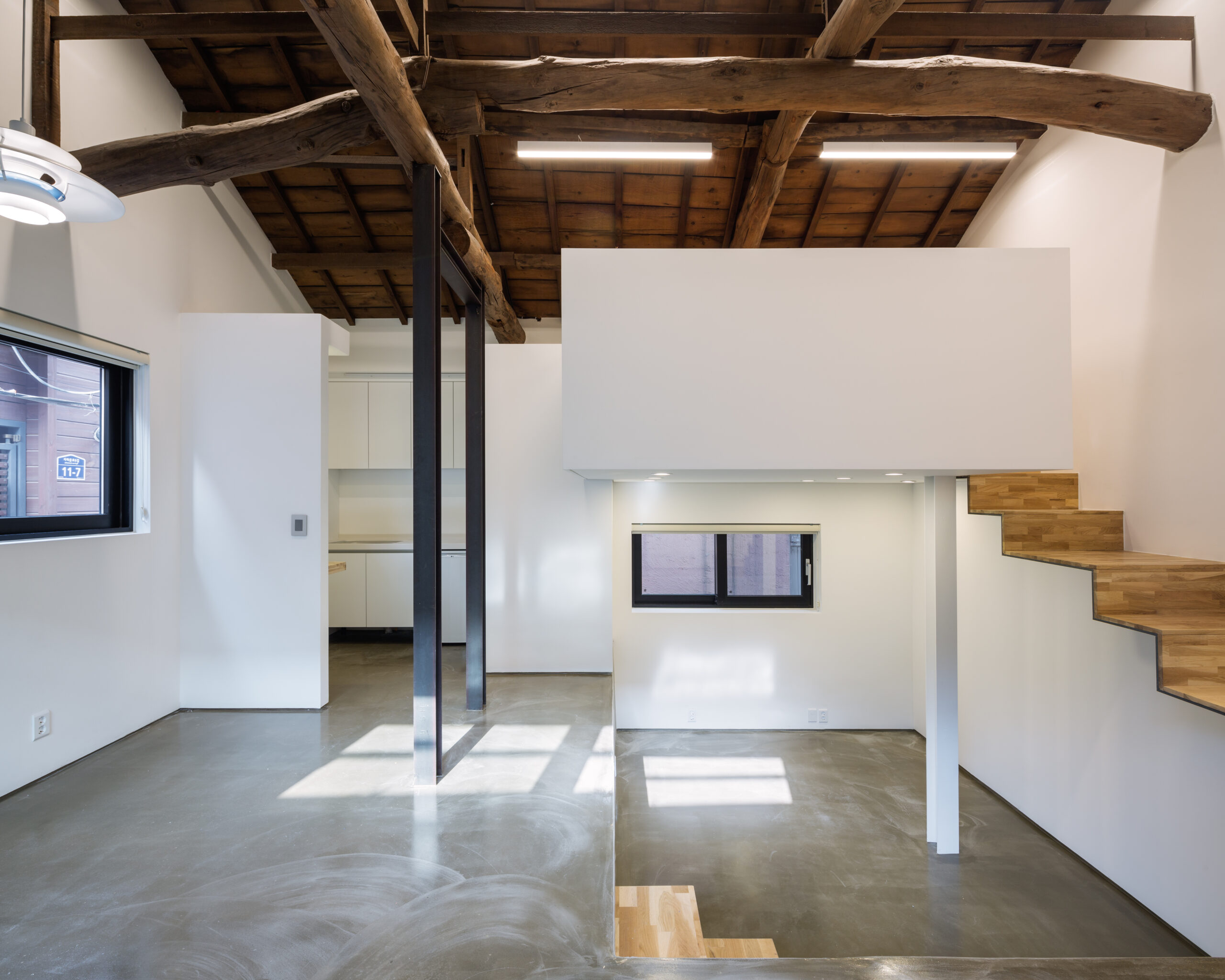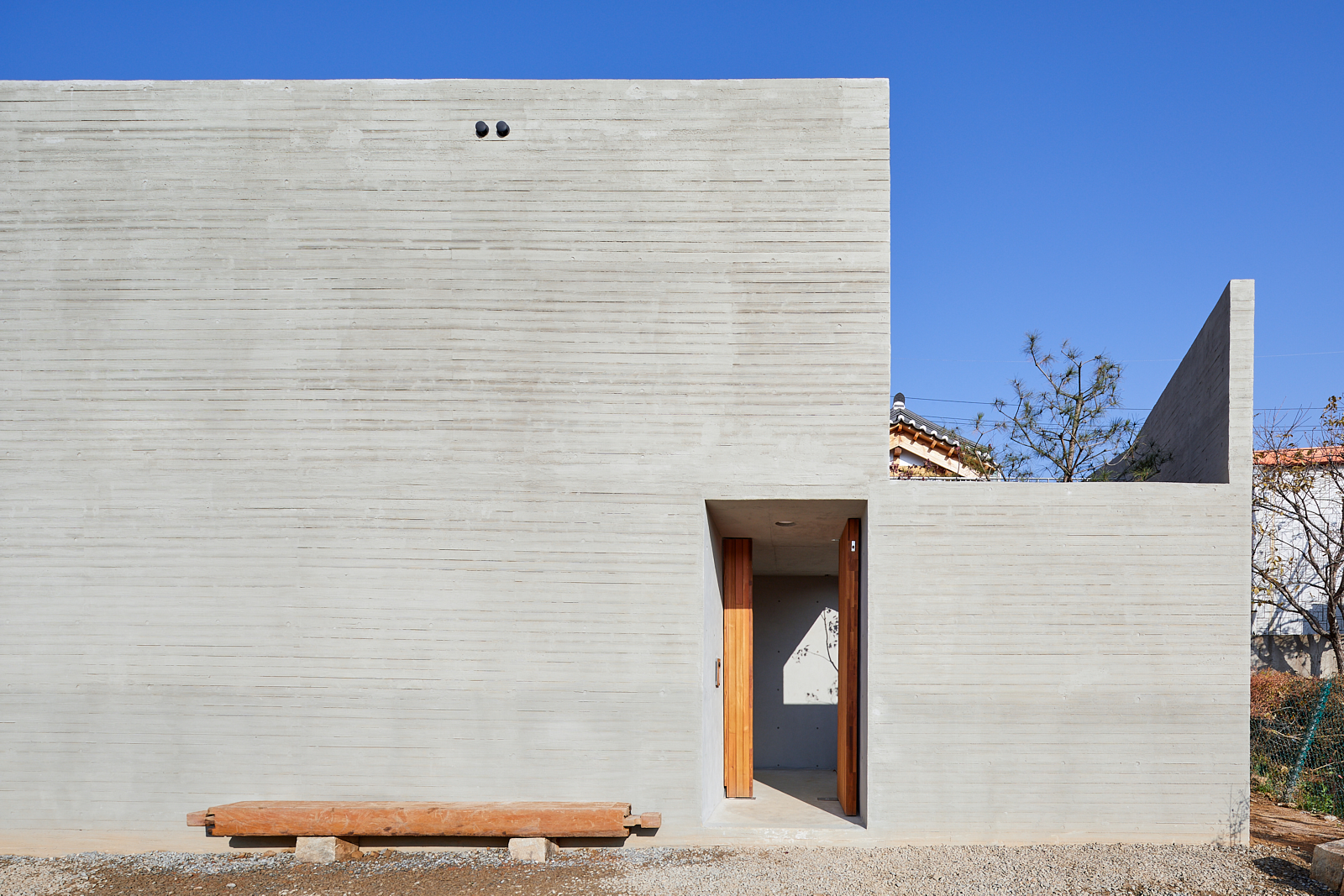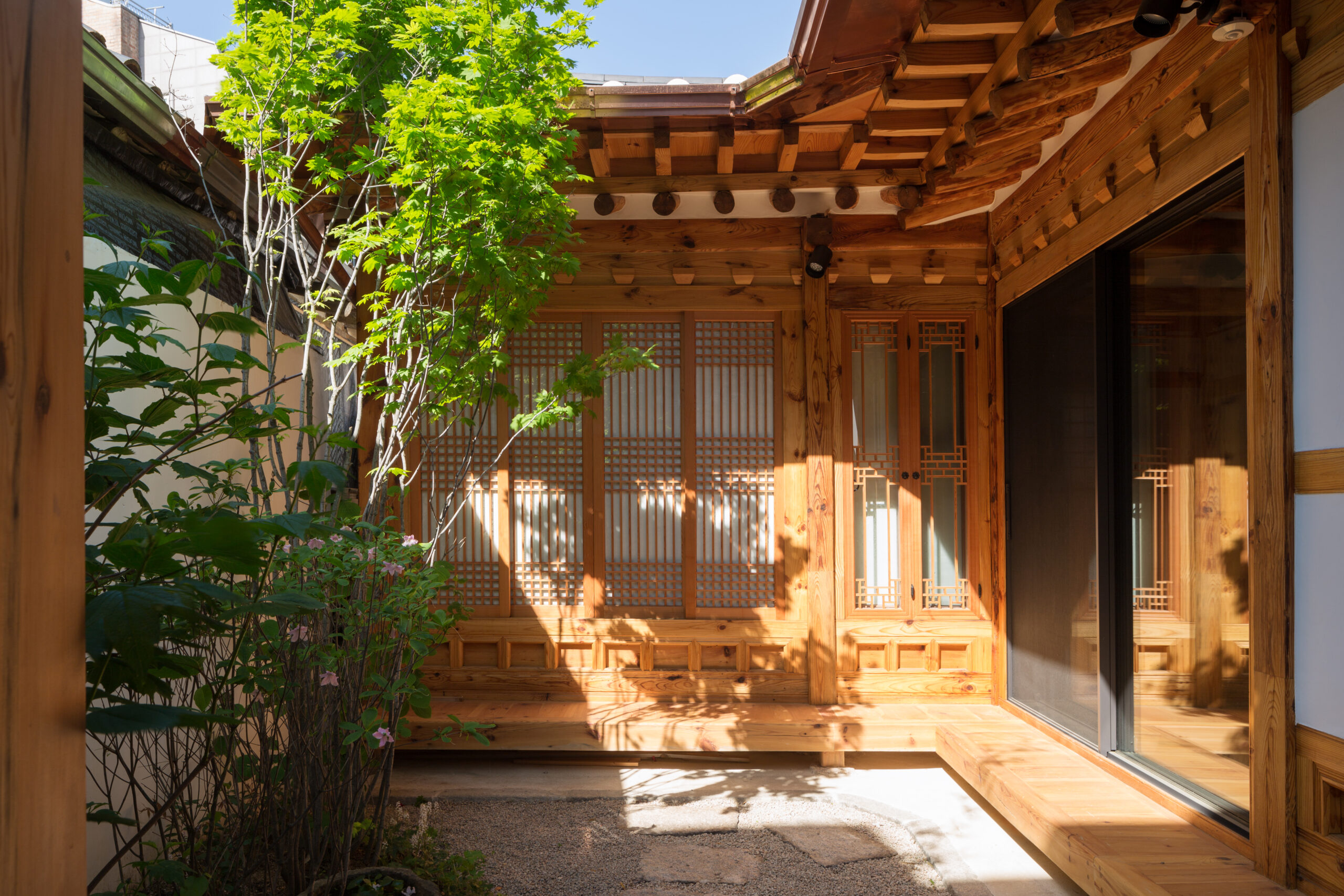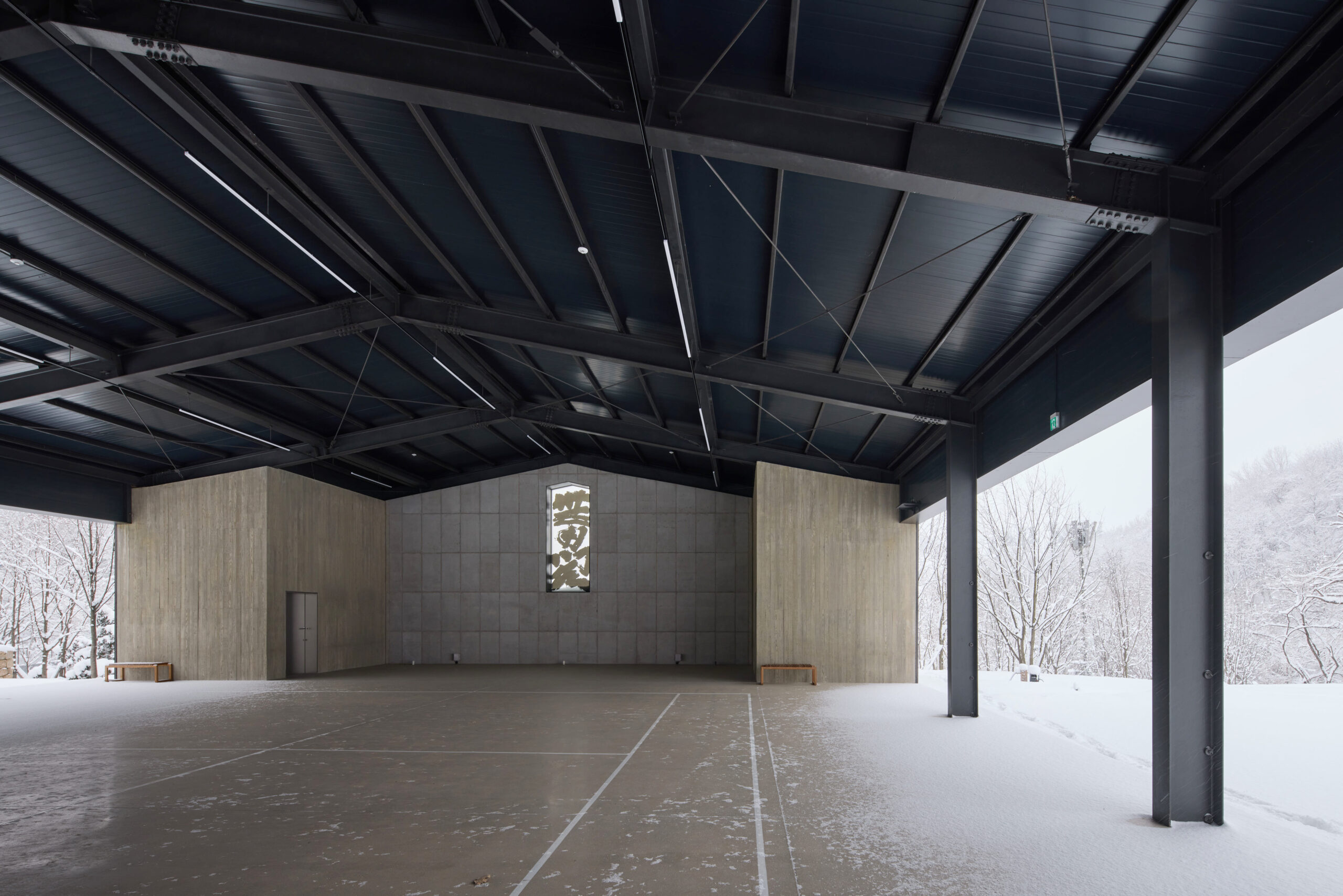
양평에 위치한 옥구정원은 한 사람만을 위해 계획된 프라이빗 리조트로, 개인의 취향과 자연 환경을 장기적으로 조율해 완성해가는 마스터플랜 프로젝트입니다. 대상지 선정 단계부터 건축사가 함께 참여하여 땅의 형상과 지형, 주변 풍경을 읽는 과정에서부터 설계가 시작되었습니다. 부지가 조성되는 전 과정은 클라이언트와의 지속적인 대화와 현장 답사를 통해 방향을 구체화했으며, 이 공간은 단순한 건축이 아니라 ‘땅을 다루는 방식’ 자체에서 출발한 프로젝트라 할 수 있습니다.
1. 기존 공장의 재해석
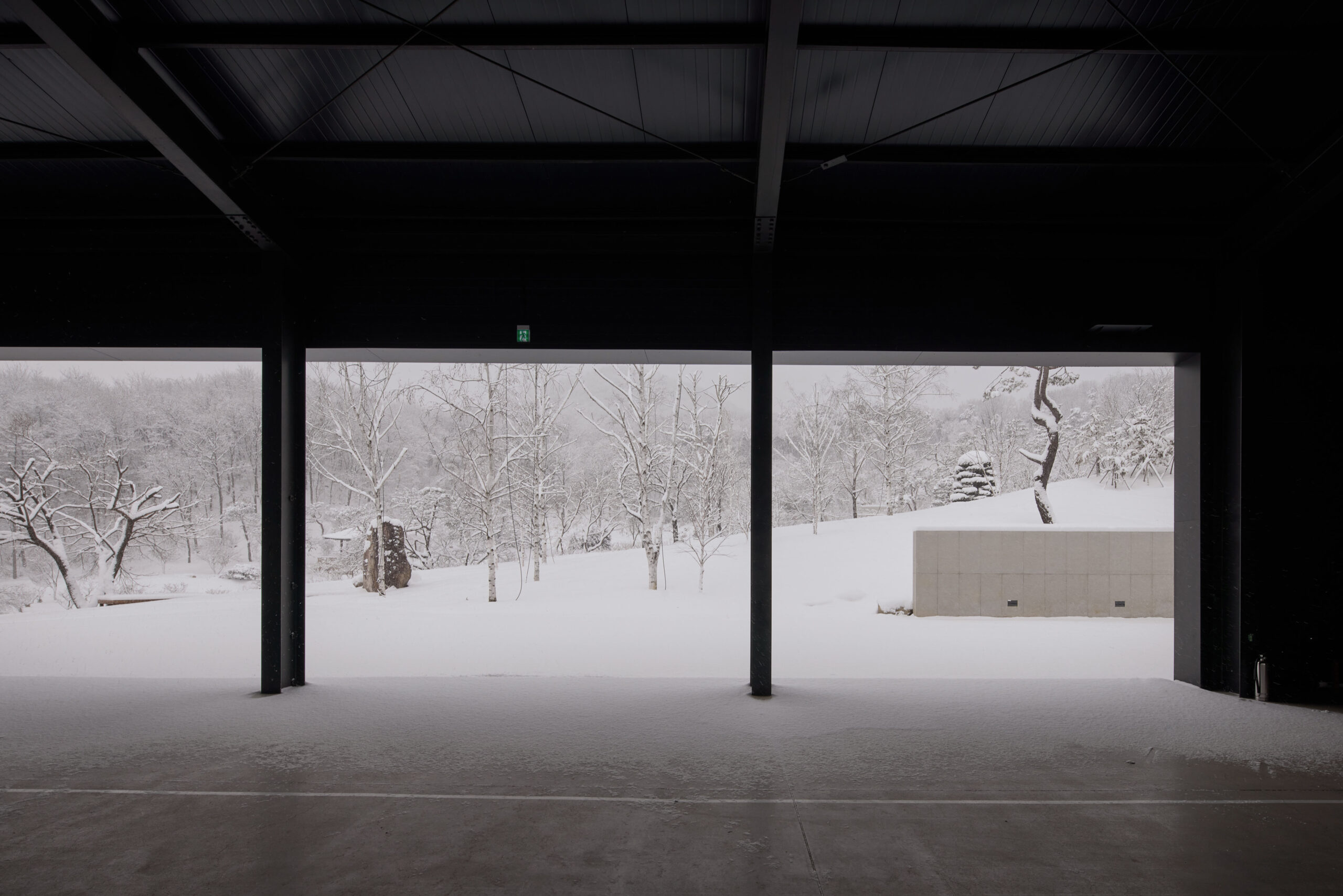
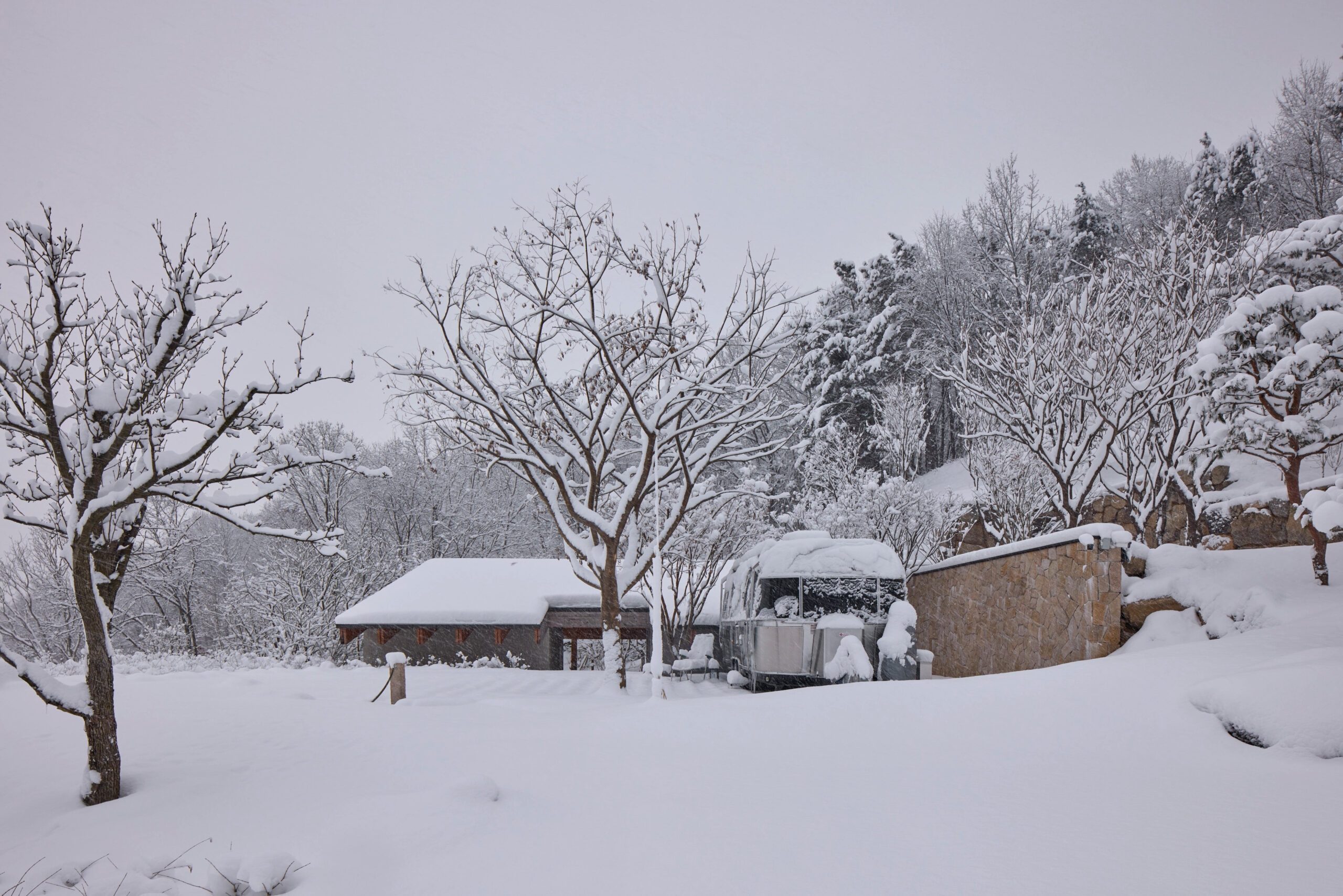
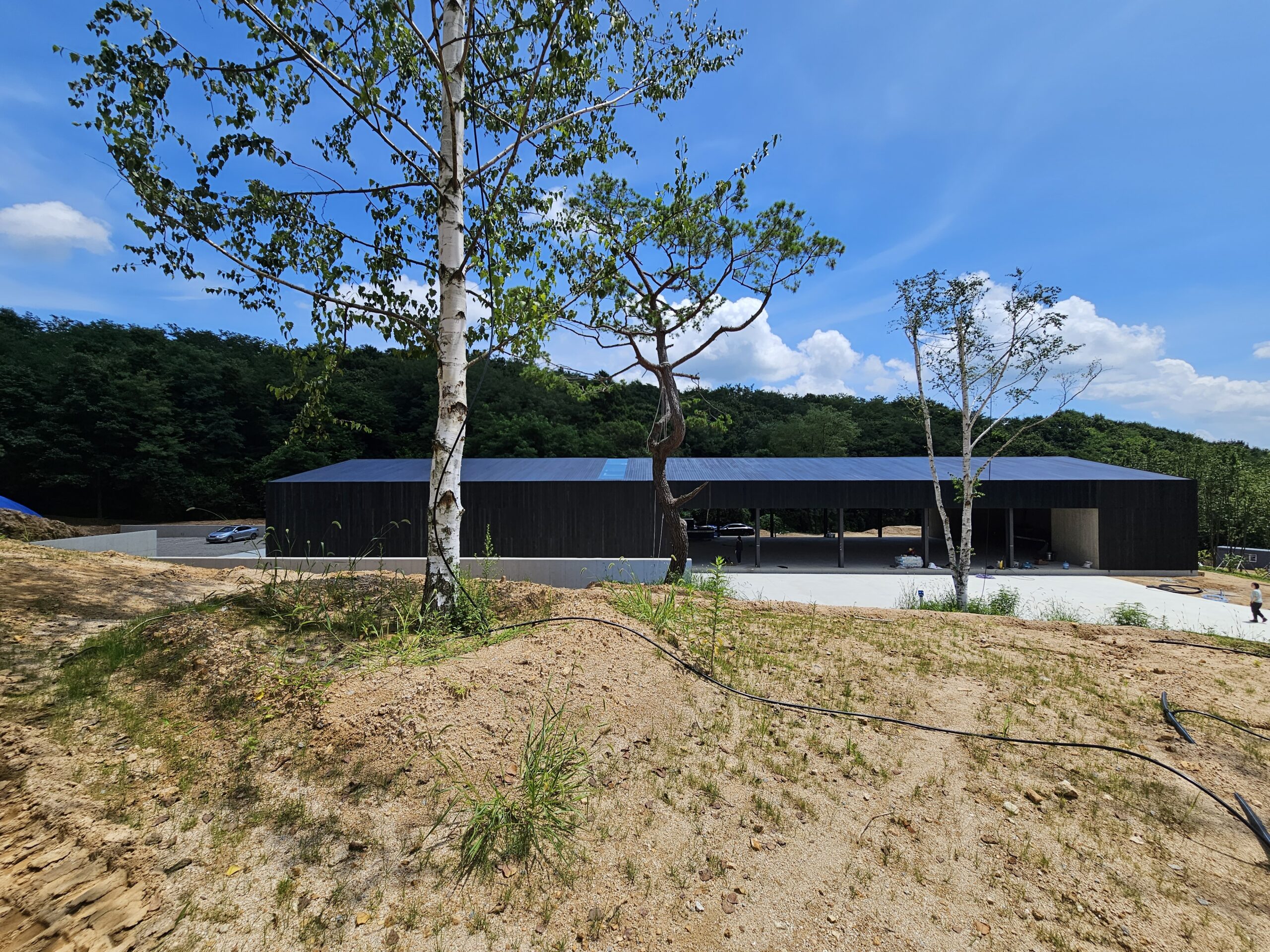
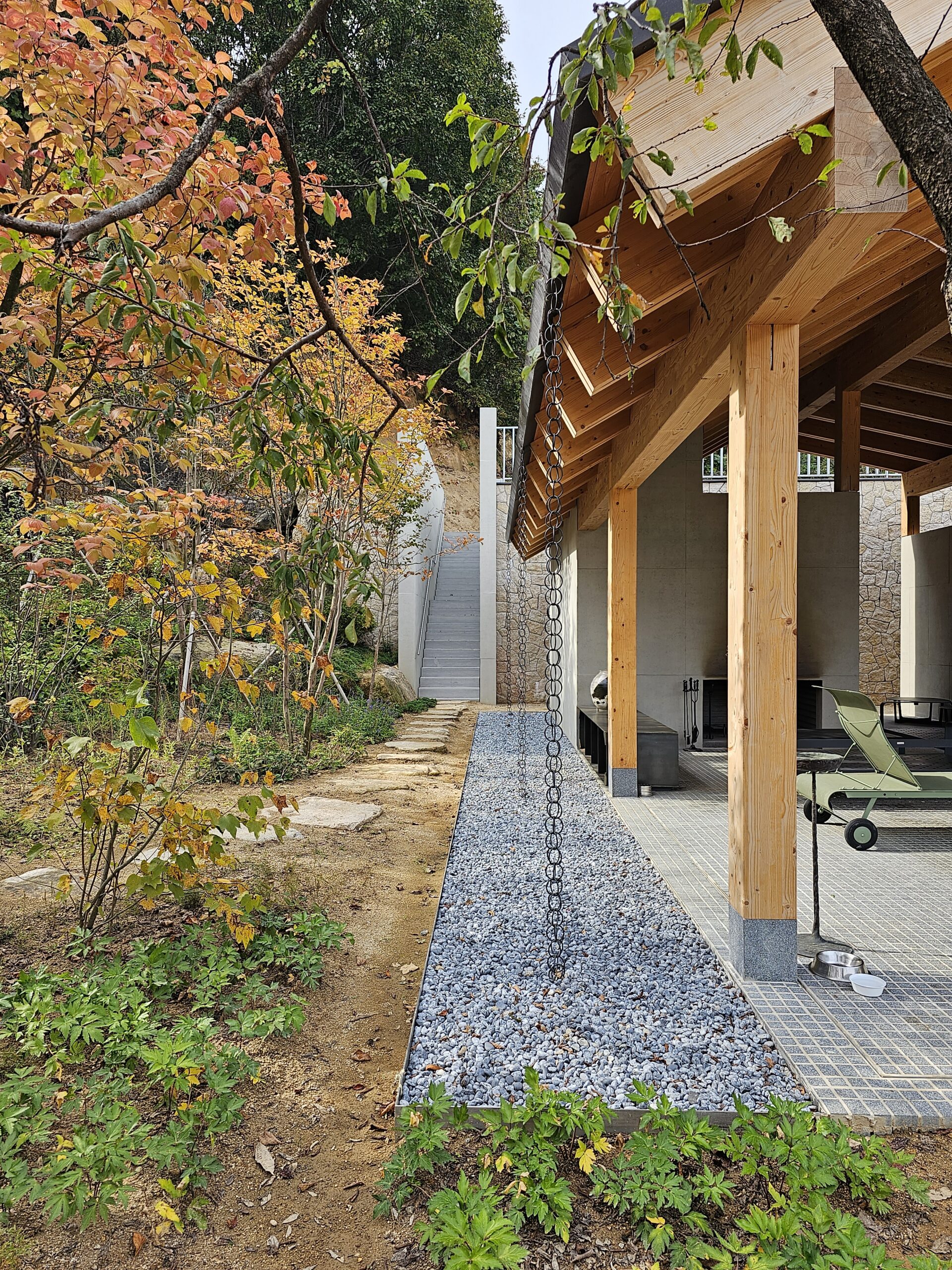
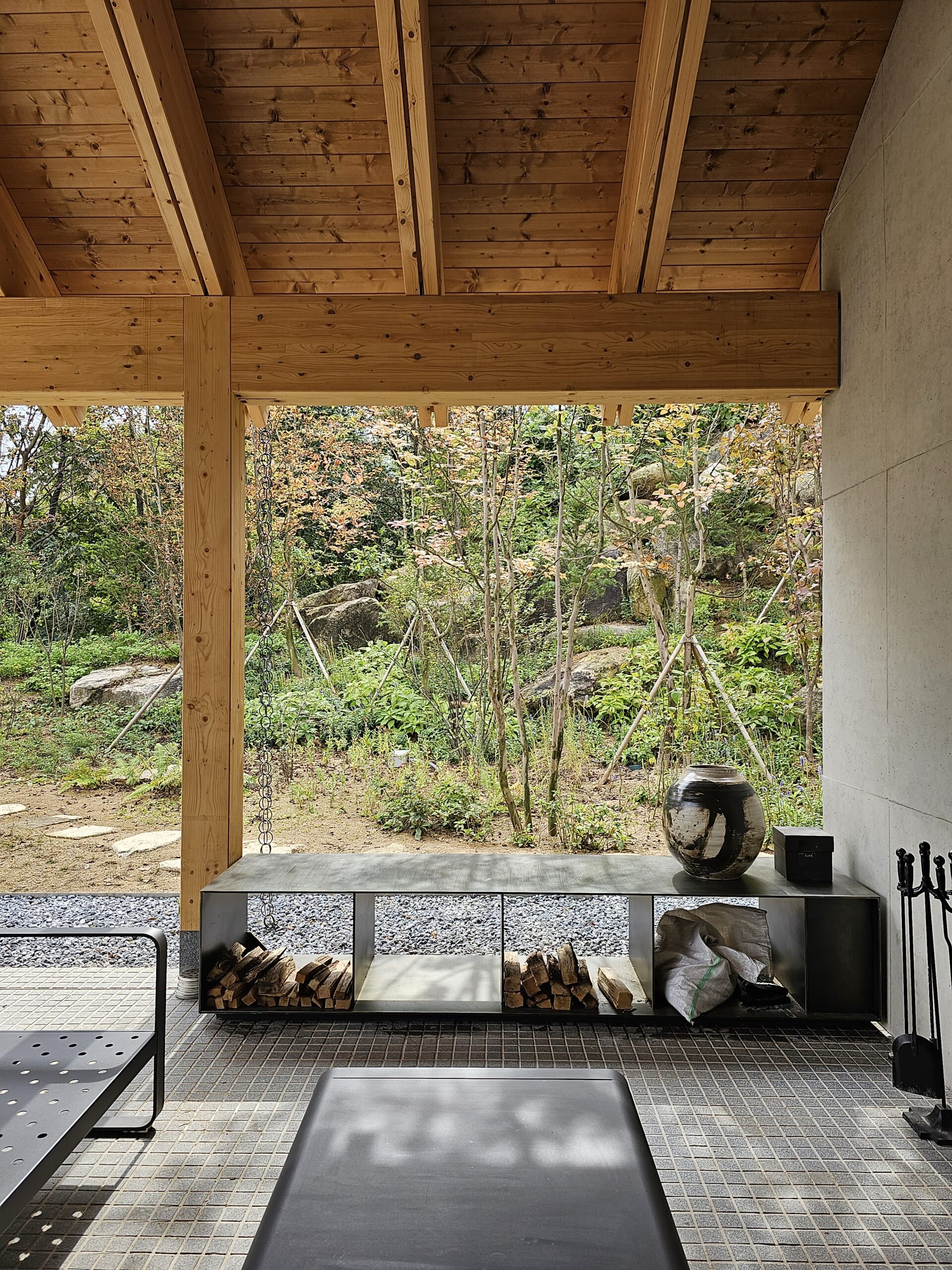
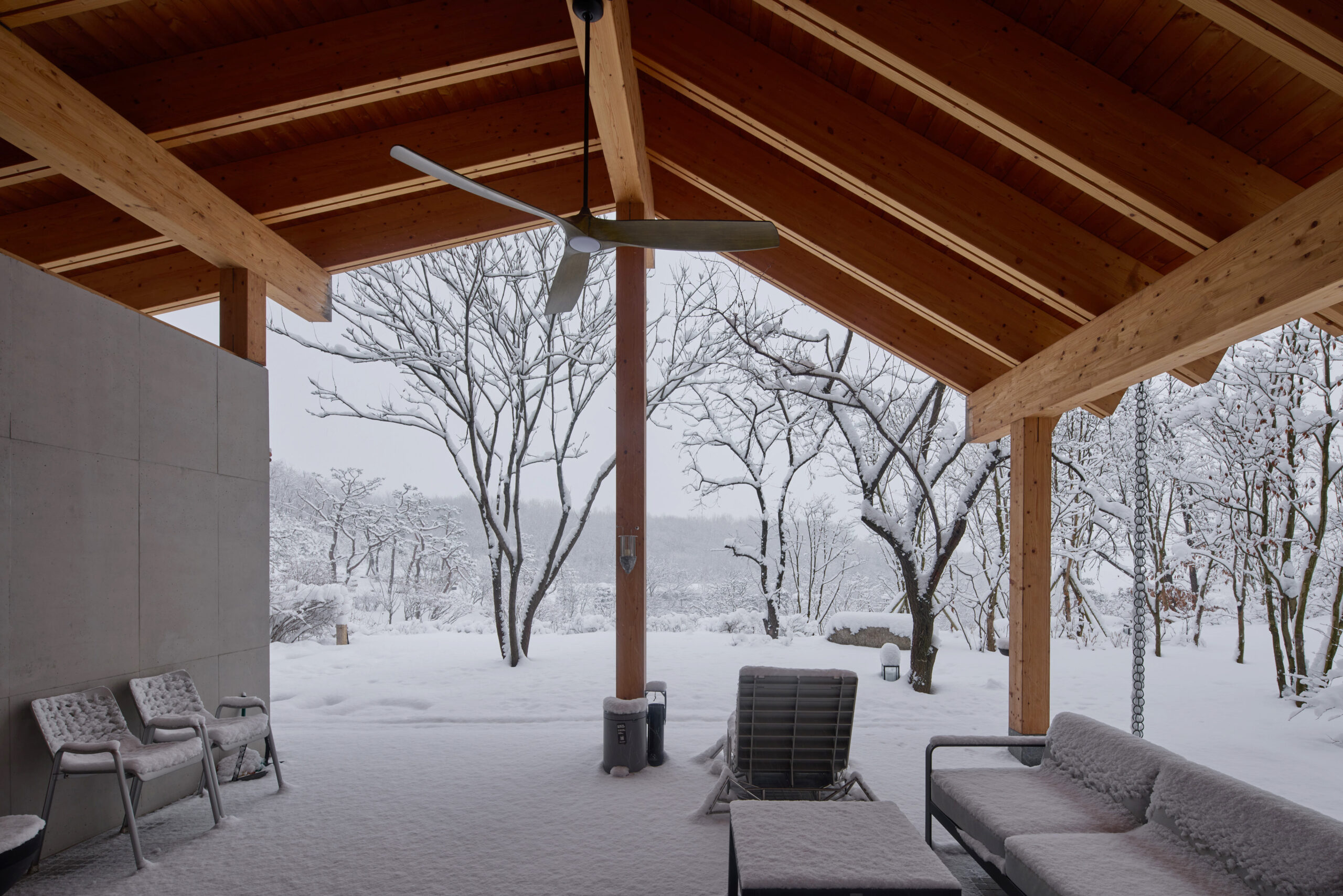
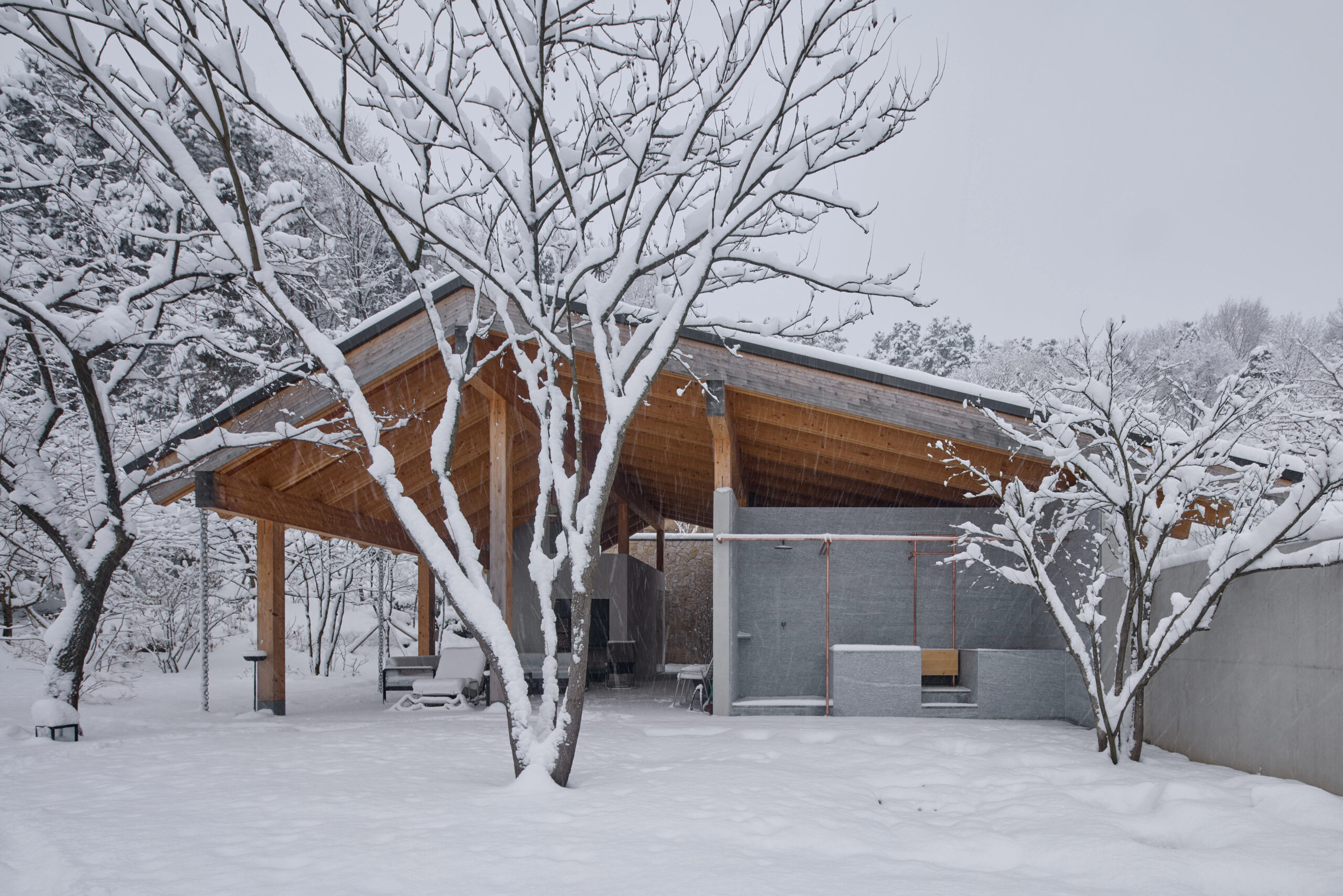
대지에는 이미 철골 구조의 공장 건물이 존재했다. 초기에는 철거 후 신축을 고려했으나, 건축가는 구조를 유지하고 재해석하는 방안을 제안했습니다. 기존 철골 프레임은 그대로 보존한 채, 공장의 한쪽은 실내 공간으로 재구성하여 클라이언트를 위한 음악당과 체육 공간으로 계획하였습니다. 내·외부를 관통하는 지붕 아래의 공간은 옥구정원 초입에서 정원의 끝까지 시선을 열어주는 보이드로 작동하며, 휴식·행사·체류가 가능한 다목적 공간이 됩니다.
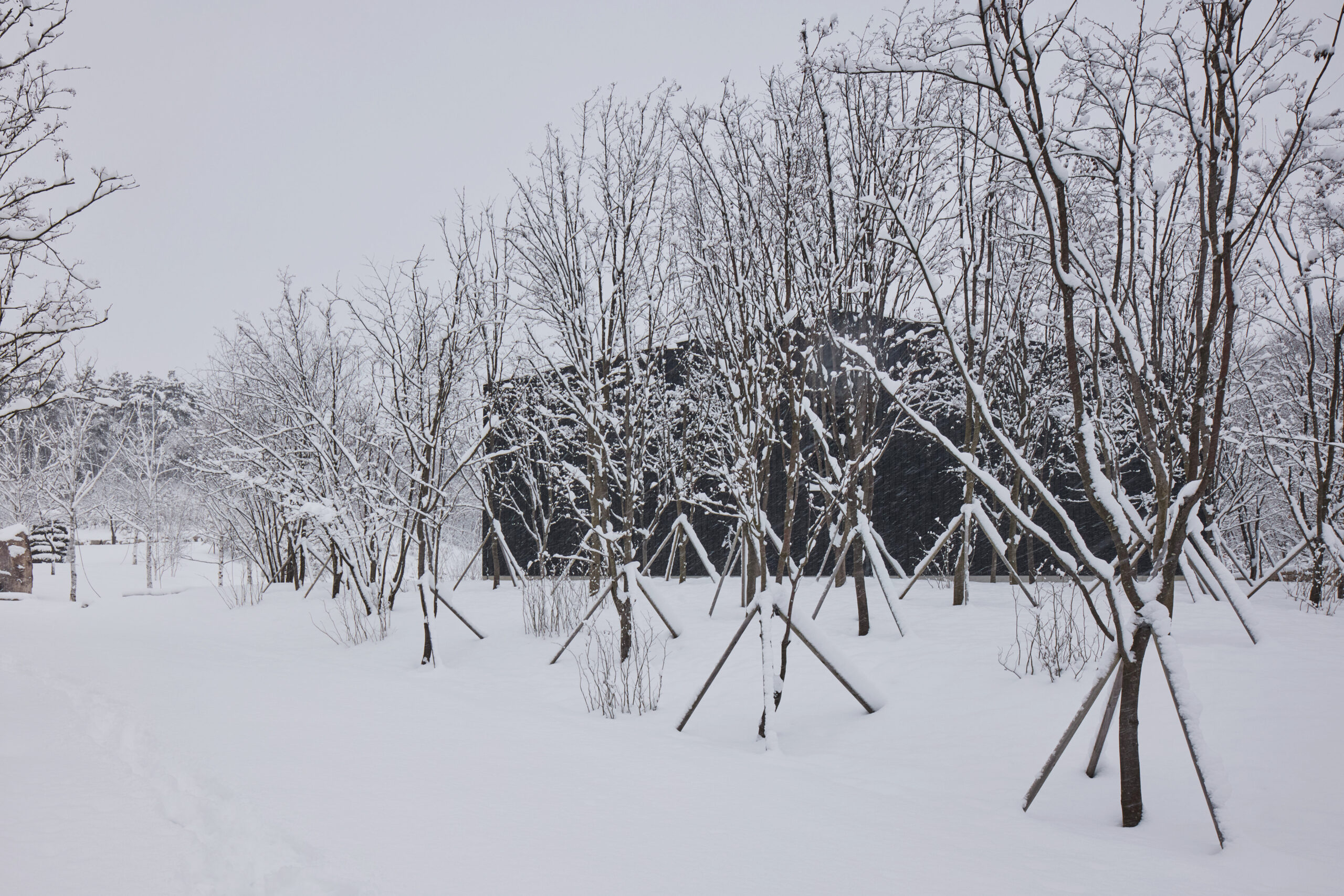
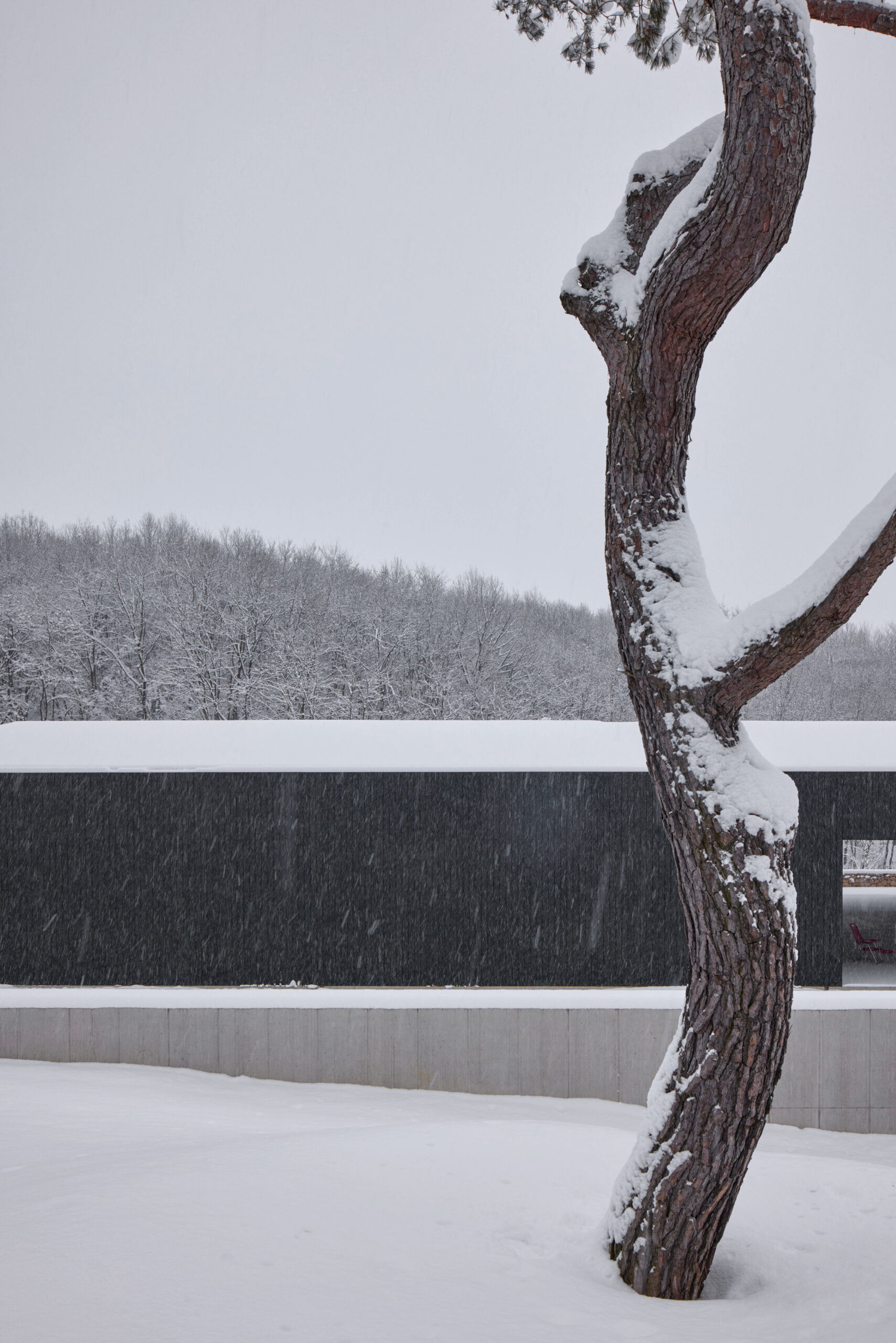
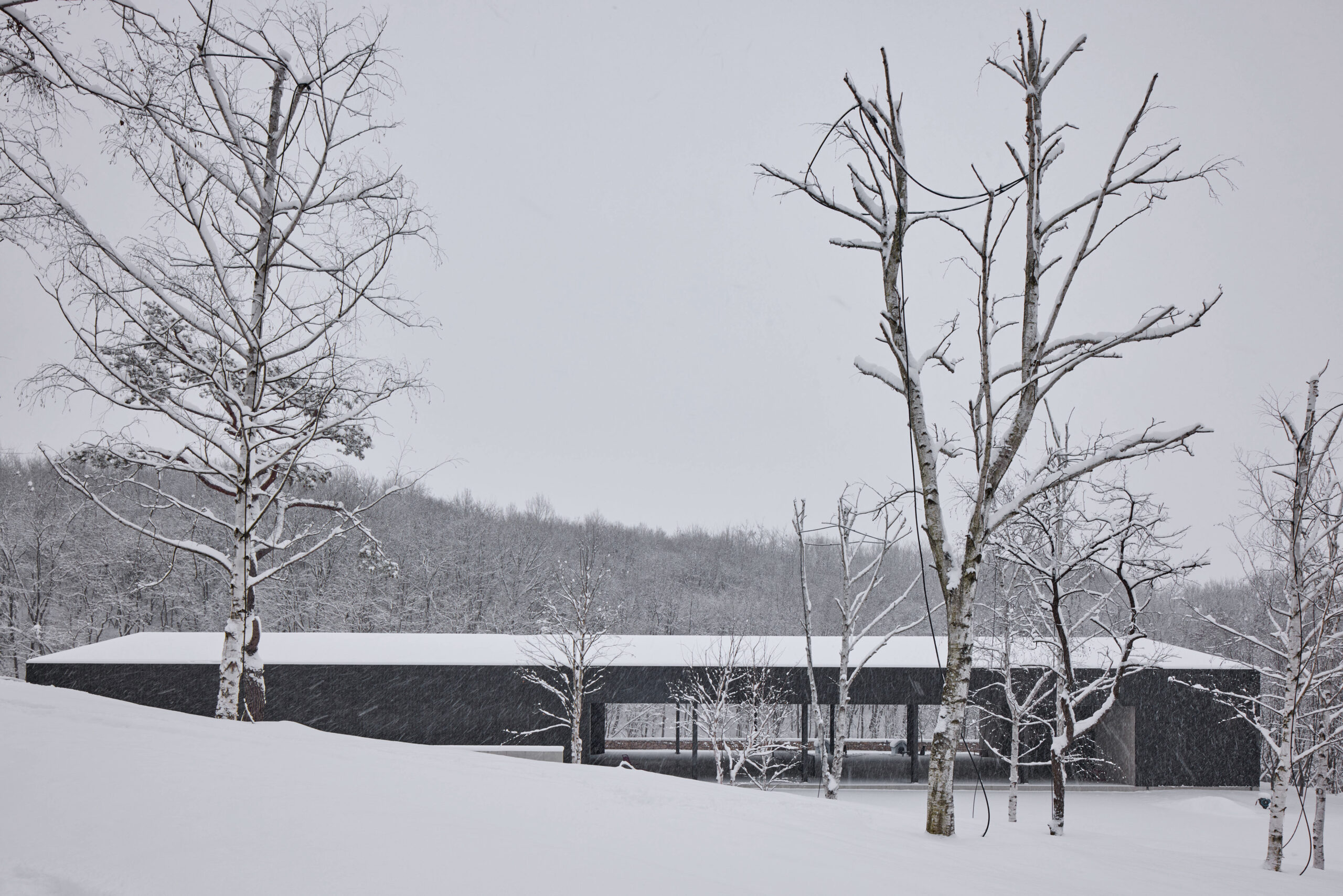
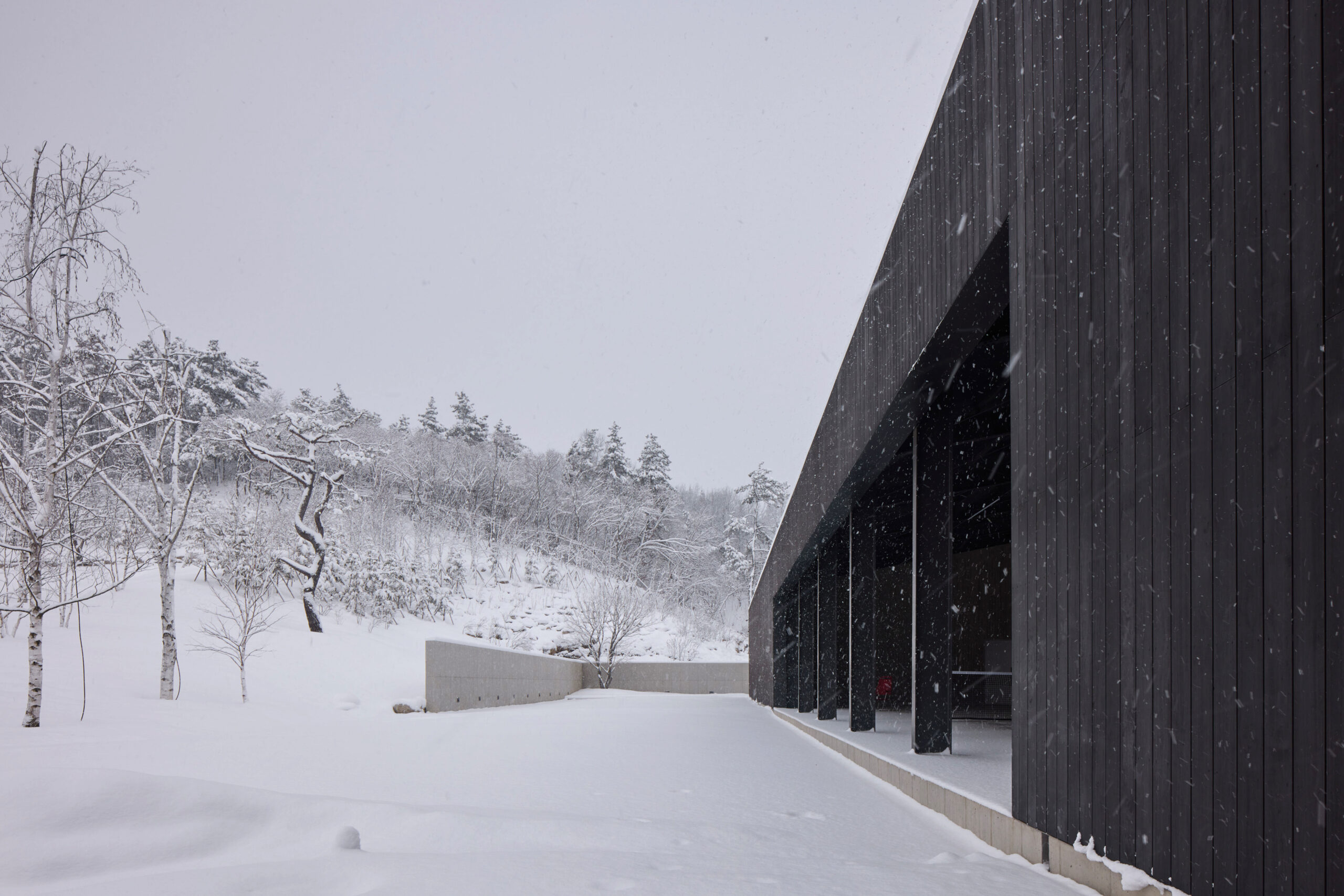
외장재는 일본 전통 목재 탄화 방식에서 유래한 기법을 적용하였습니다. 나무를 태워 형성된 깊은 흑색은 자연의 색이면서 동시에 인간의 행위를 거친 또 다른 자연의 결과물입니다. 이 검은 매스는 계절의 변화 속에서 배경이 되기도 하고 중심이 되기도 하며, 특히 눈이 내린 겨울에는 더욱 강한 대비를 형성합니다. 색을 잃은 풍경 한가운데 놓인 검정의 솔리드한 매스는 공간의 중심을 잡아주며, 눈 덮인 지붕과의 대비는 옥구정원을 상징적인 장면으로 완성됩니다.
2. 땅에 묻힌 오두막
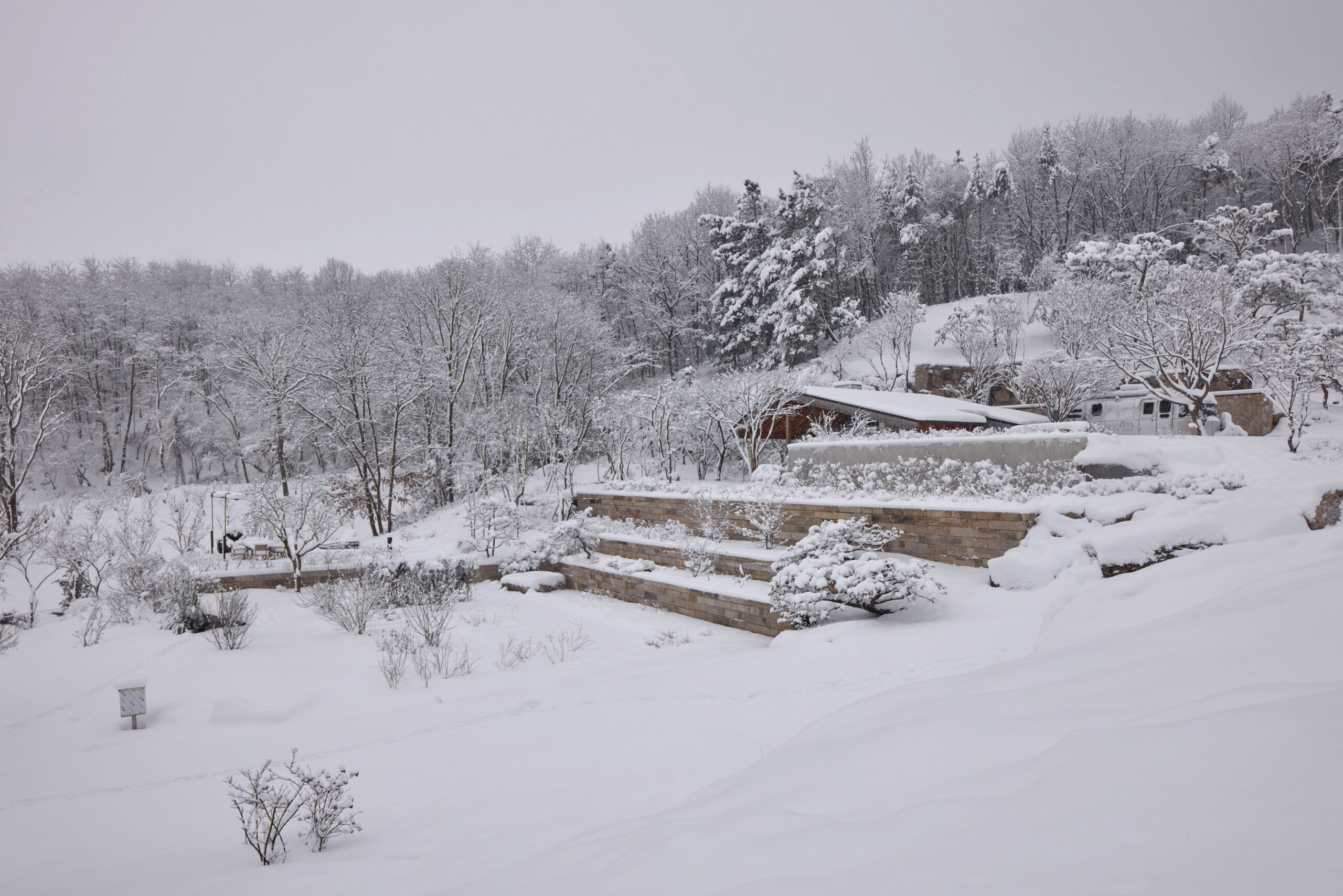
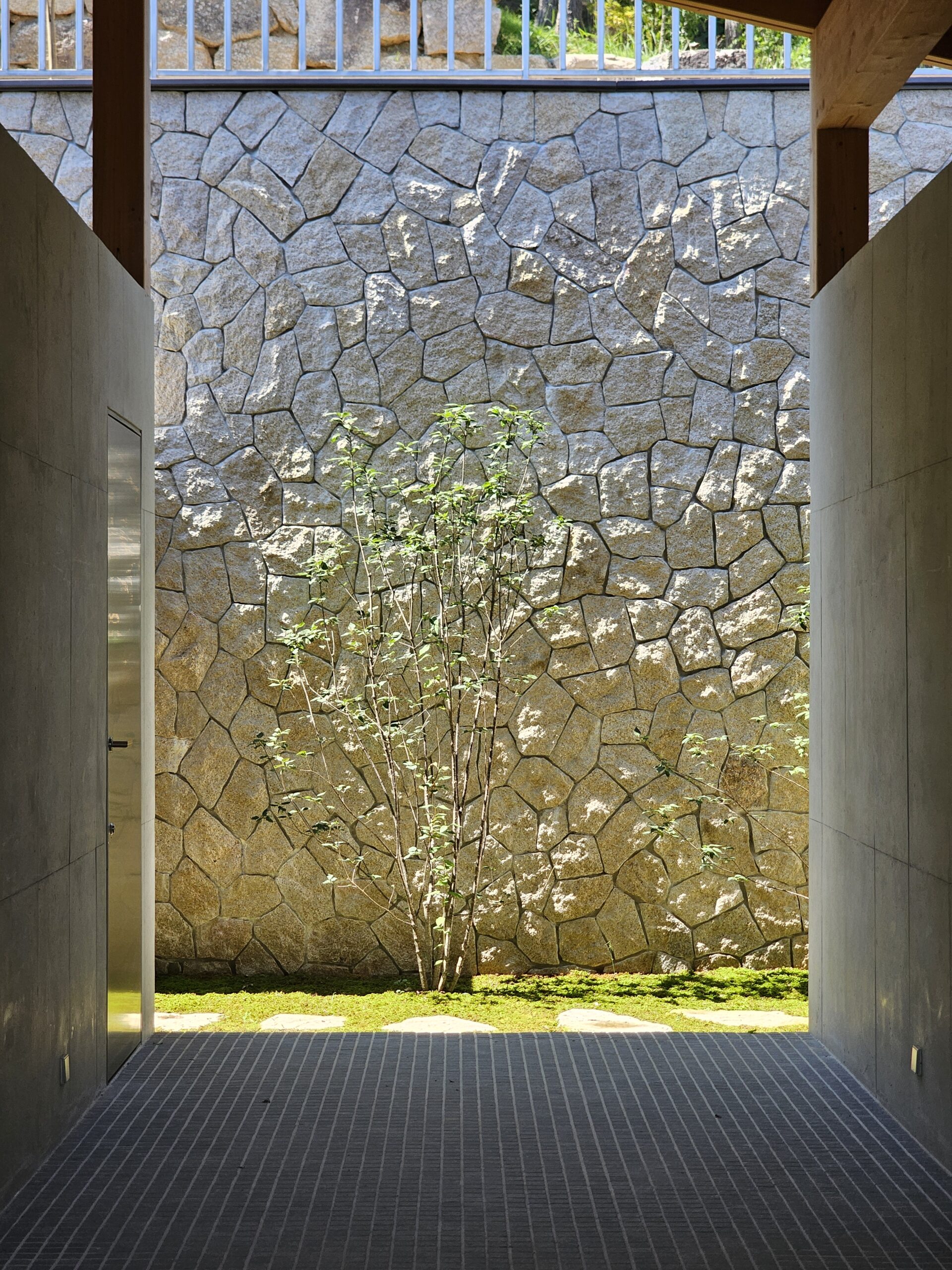
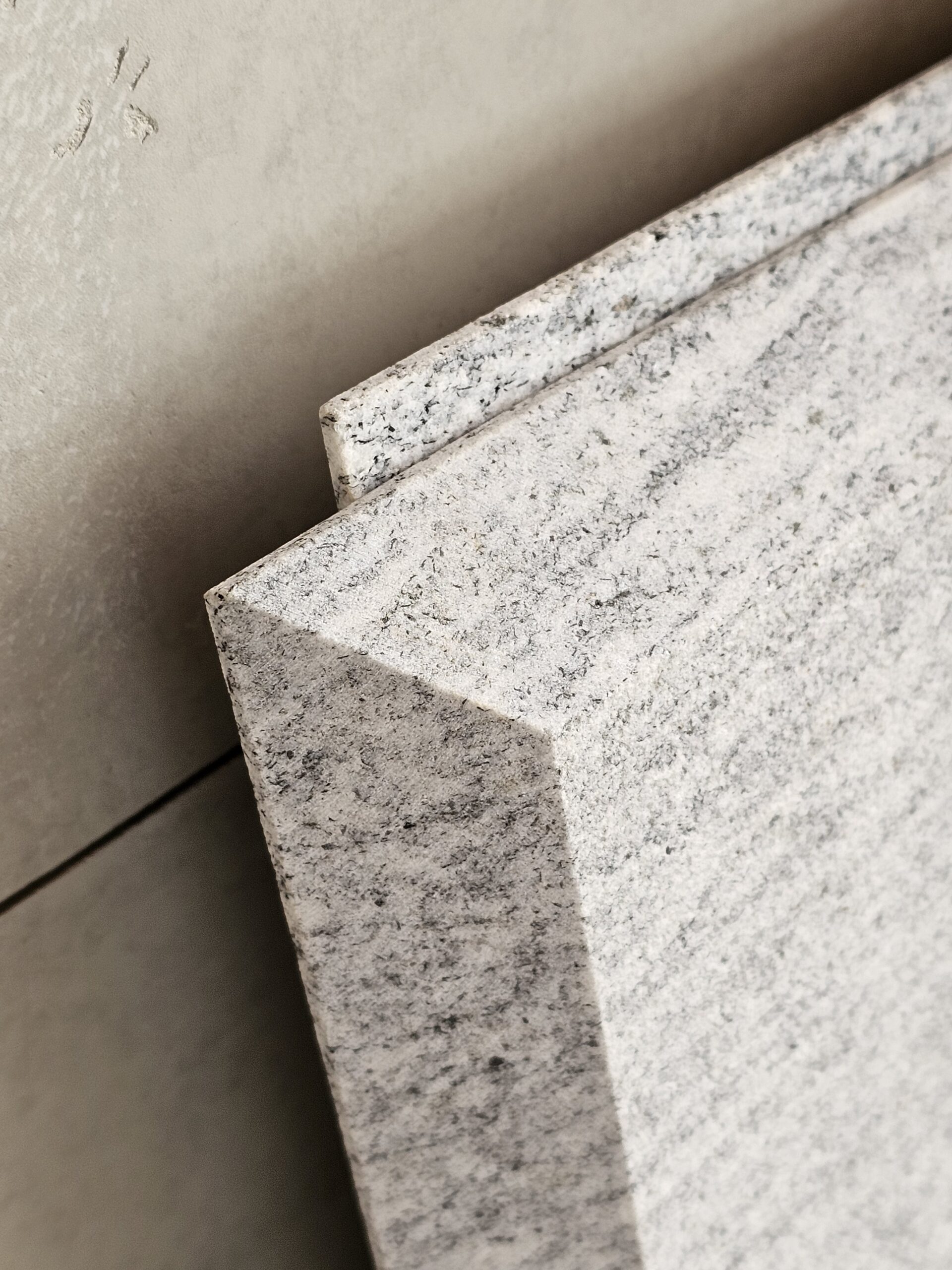
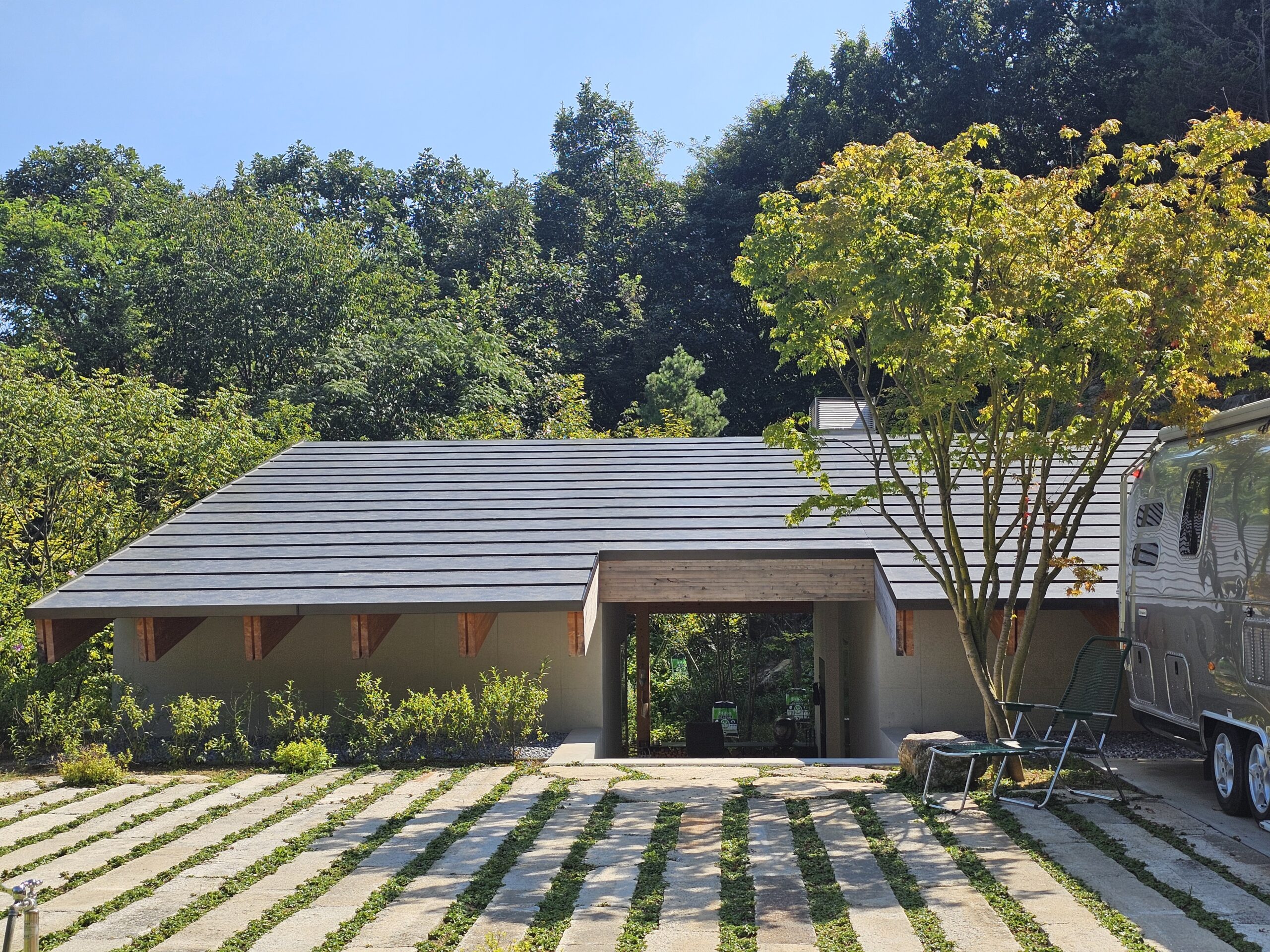
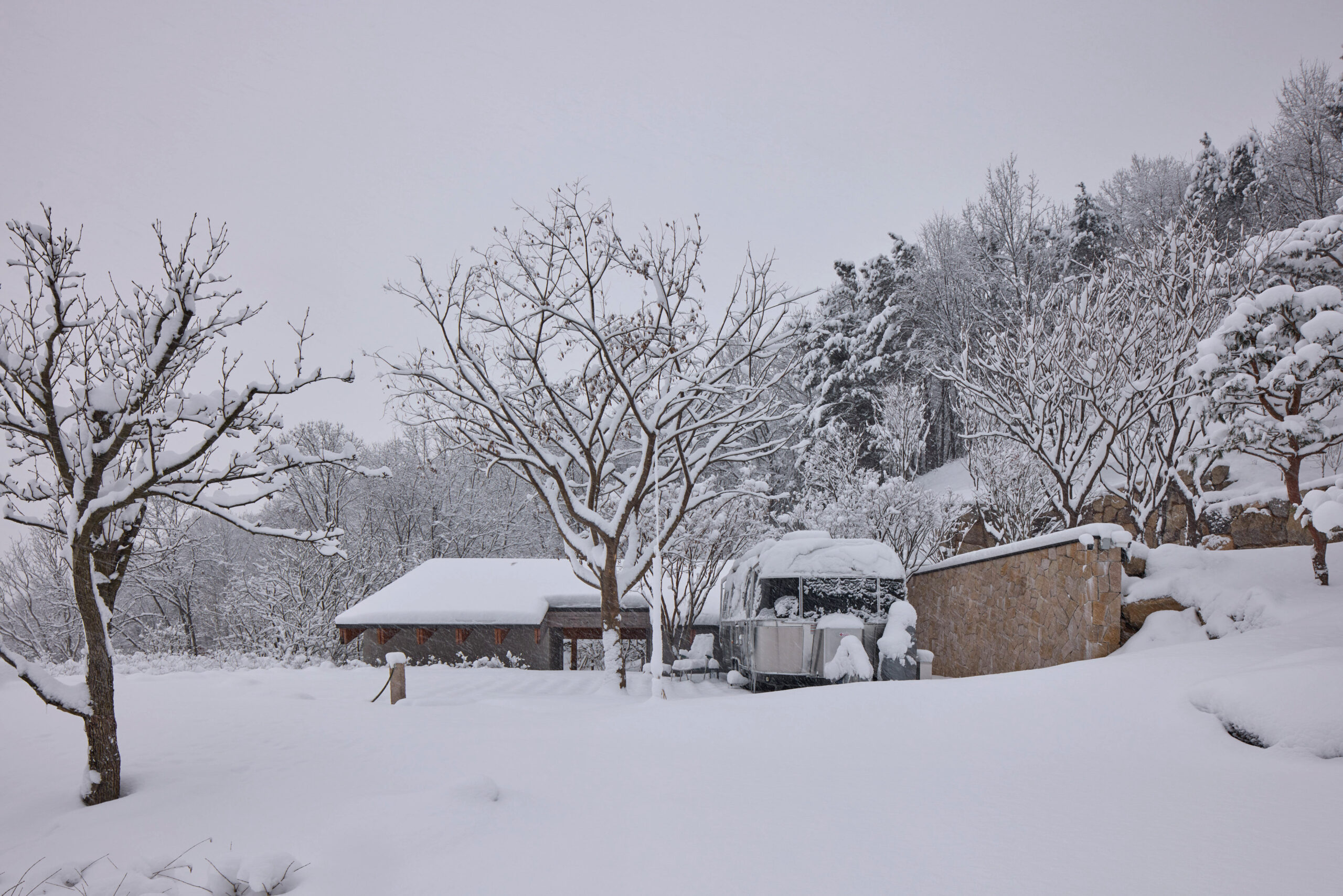
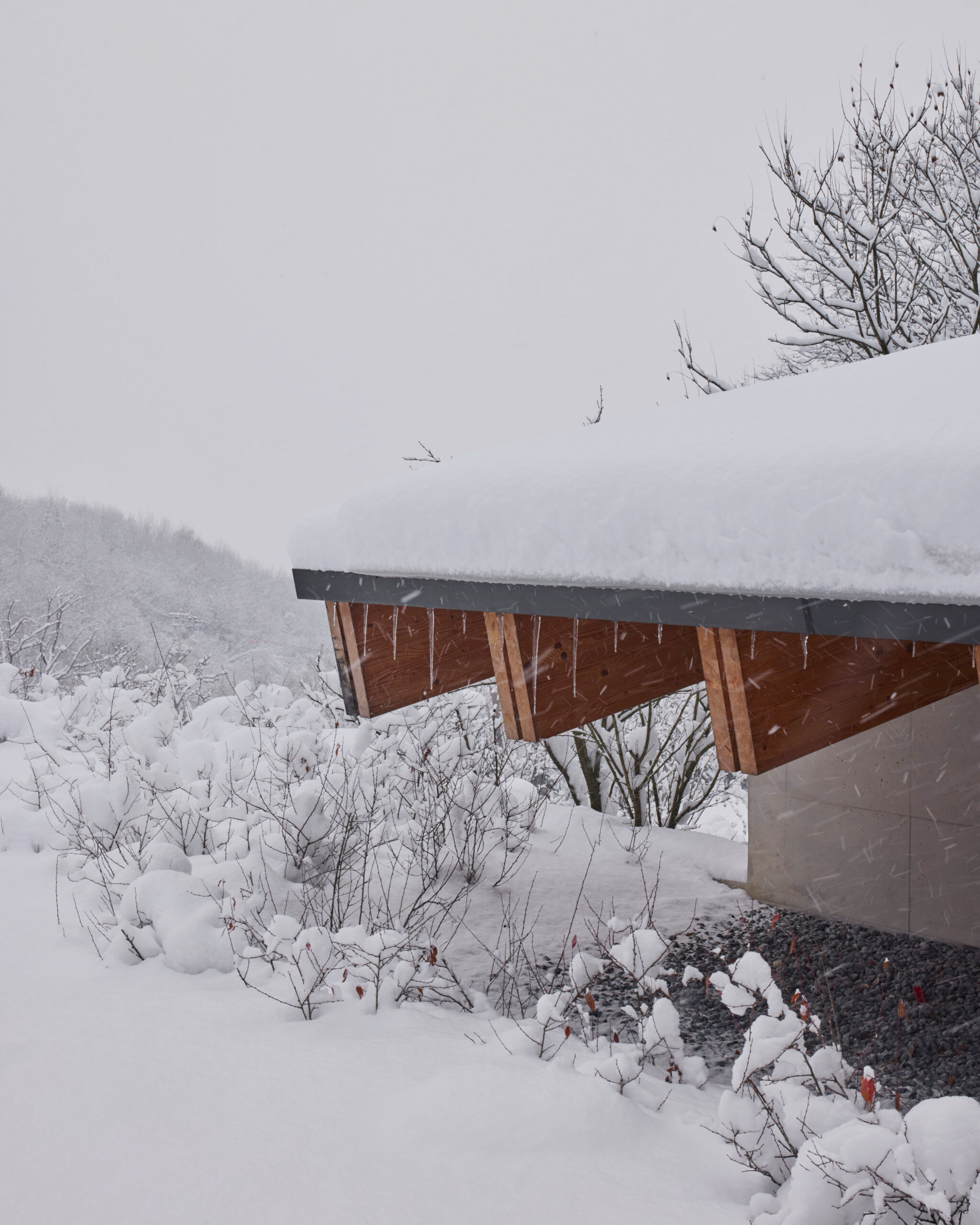
정원을 따라 경사를 걸어 올라 끝자락에 이르면, 마치 땅속에 일부가 묻힌 듯 자리한 작은 오두막이 나타납니다. 지붕은 대지에서 채취한 돌을 그대로 얹어, 건축이 땅과 분리되지 않은 하나의 지형처럼 인식되도록 계획하였습니다. 일반적으로 지붕 마감재로 사용하지 않는 ‘돌’을 적용함으로써 구조적 한계를 실험하였고, 무거운 재료를 감당하기 위해 구조 방식 또한 세심하게 조율되었습니다.
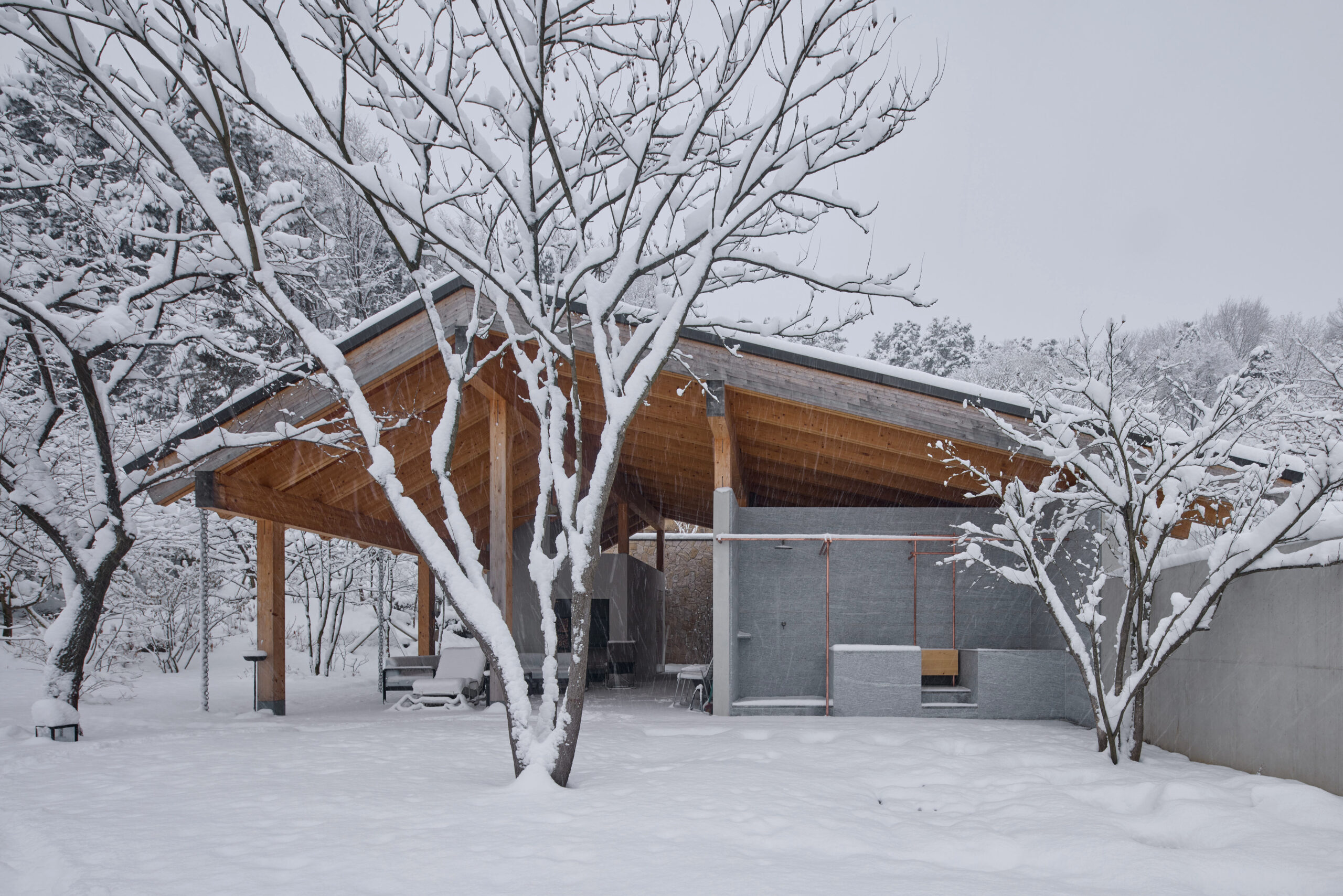
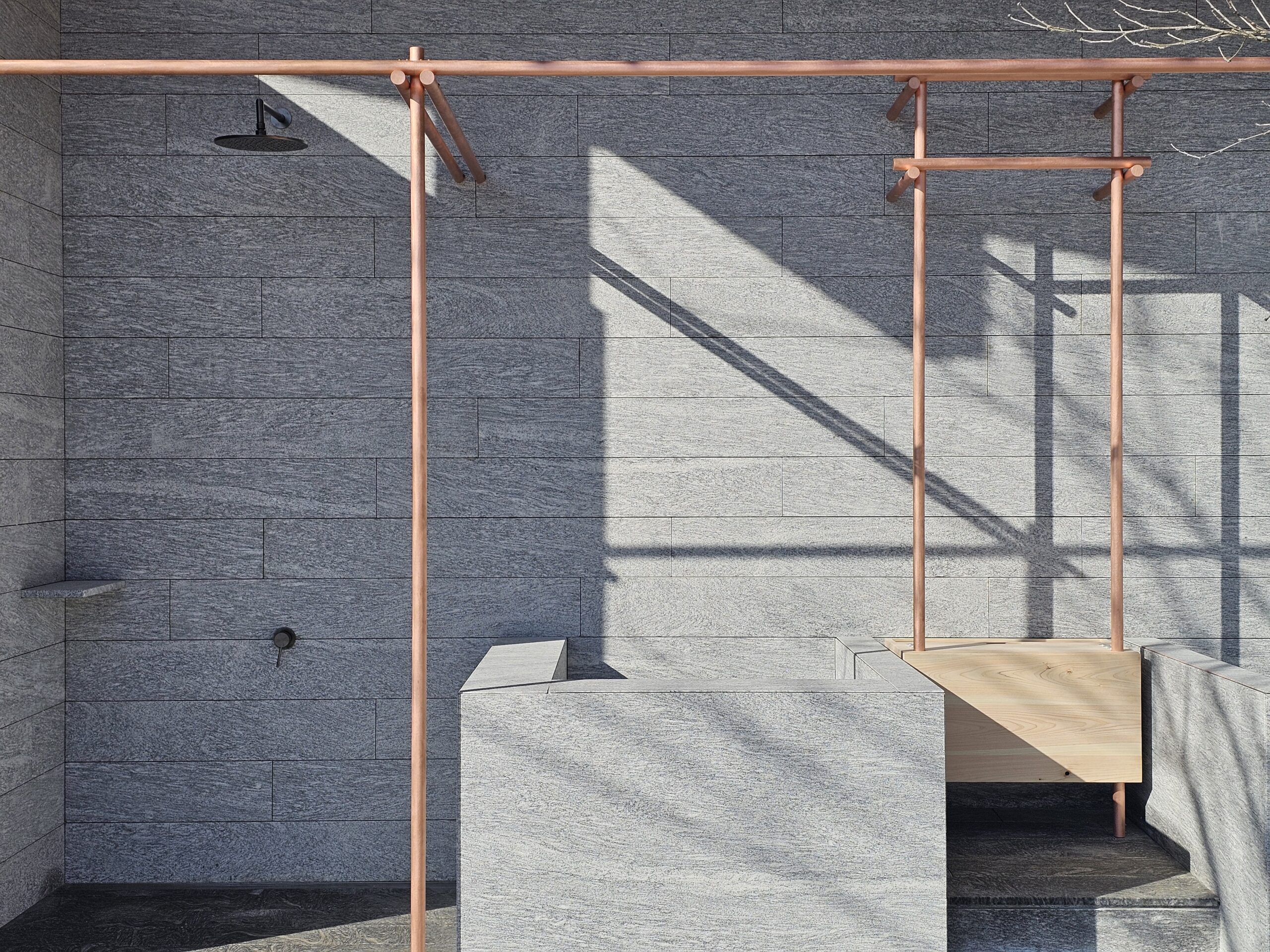
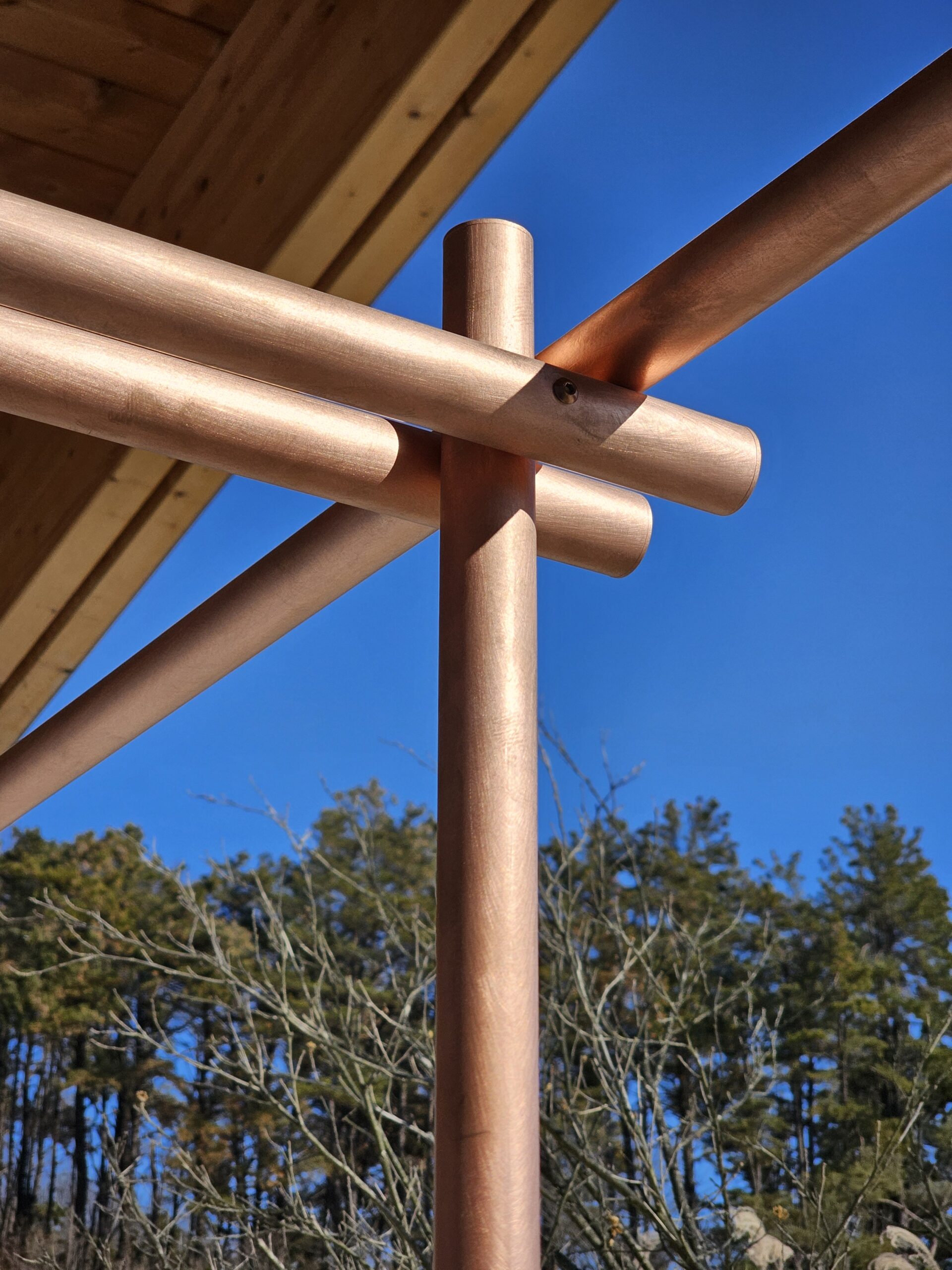
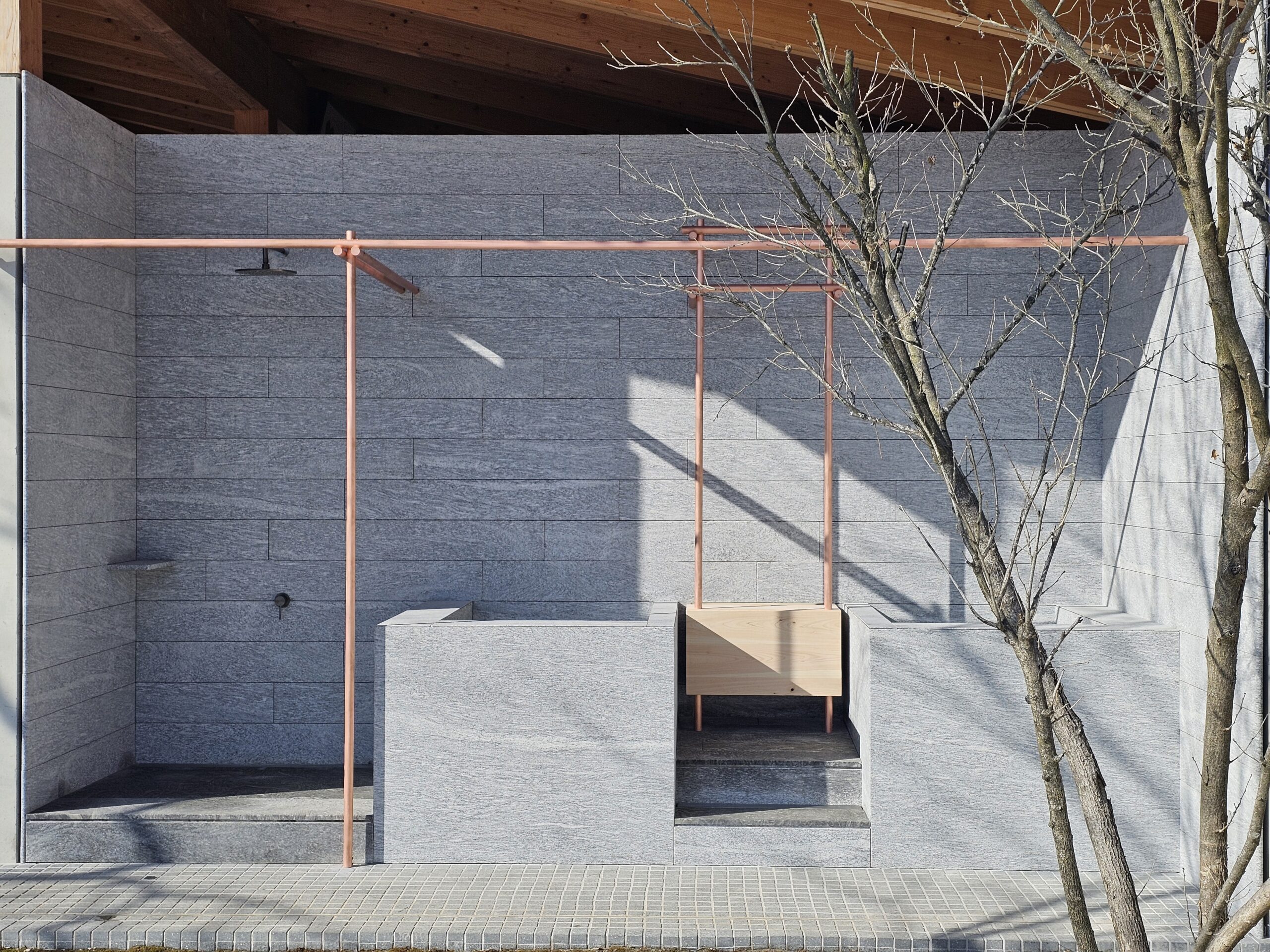
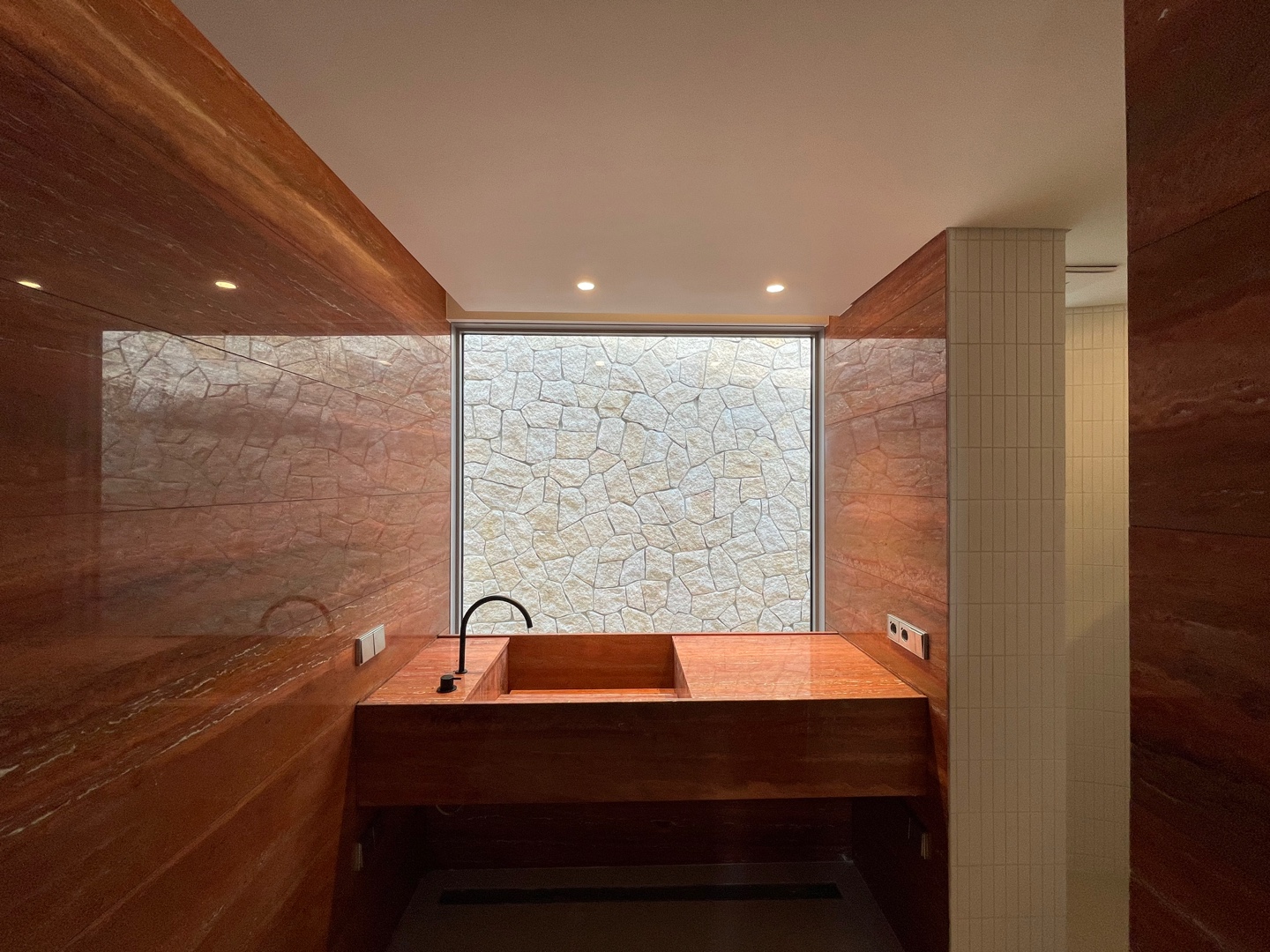
이 오두막은 파이어플레이스와 정원 전체를 내려다볼 수 있는 프라이빗 온천으로 구성되었습니다. 2인이 사용할 수 있도록 계획된 온천은 돌과 동(구리)을 주요 재료로 사용해 물과 시간의 흔적이 자연스럽게 축적되도록 의도했습니다. 무게감 있는 재료와 섬세한 디테일이 대비를 이루며, 공간은 작지만 강한 밀도를 가집니다.
3. 자연과의 관계
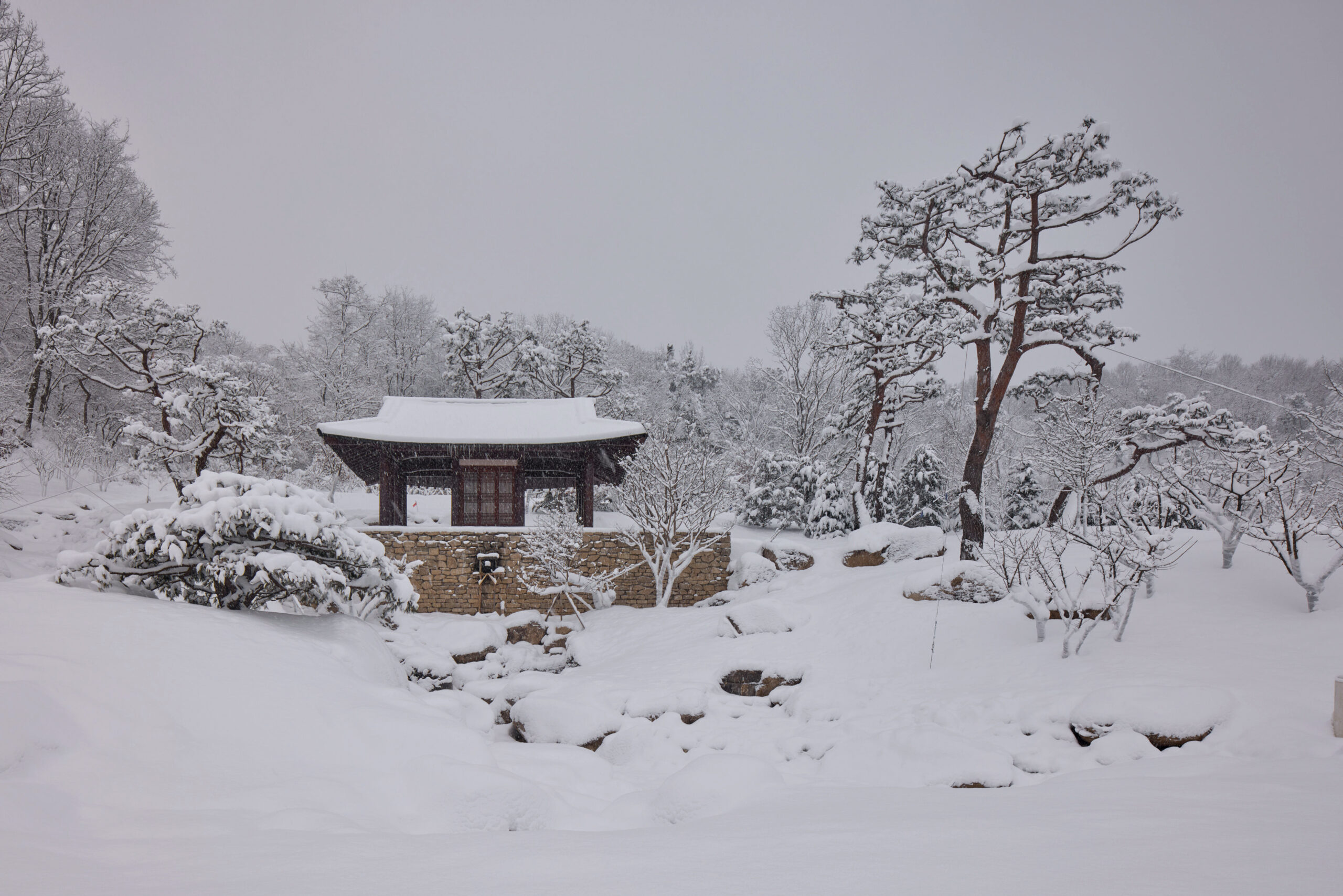
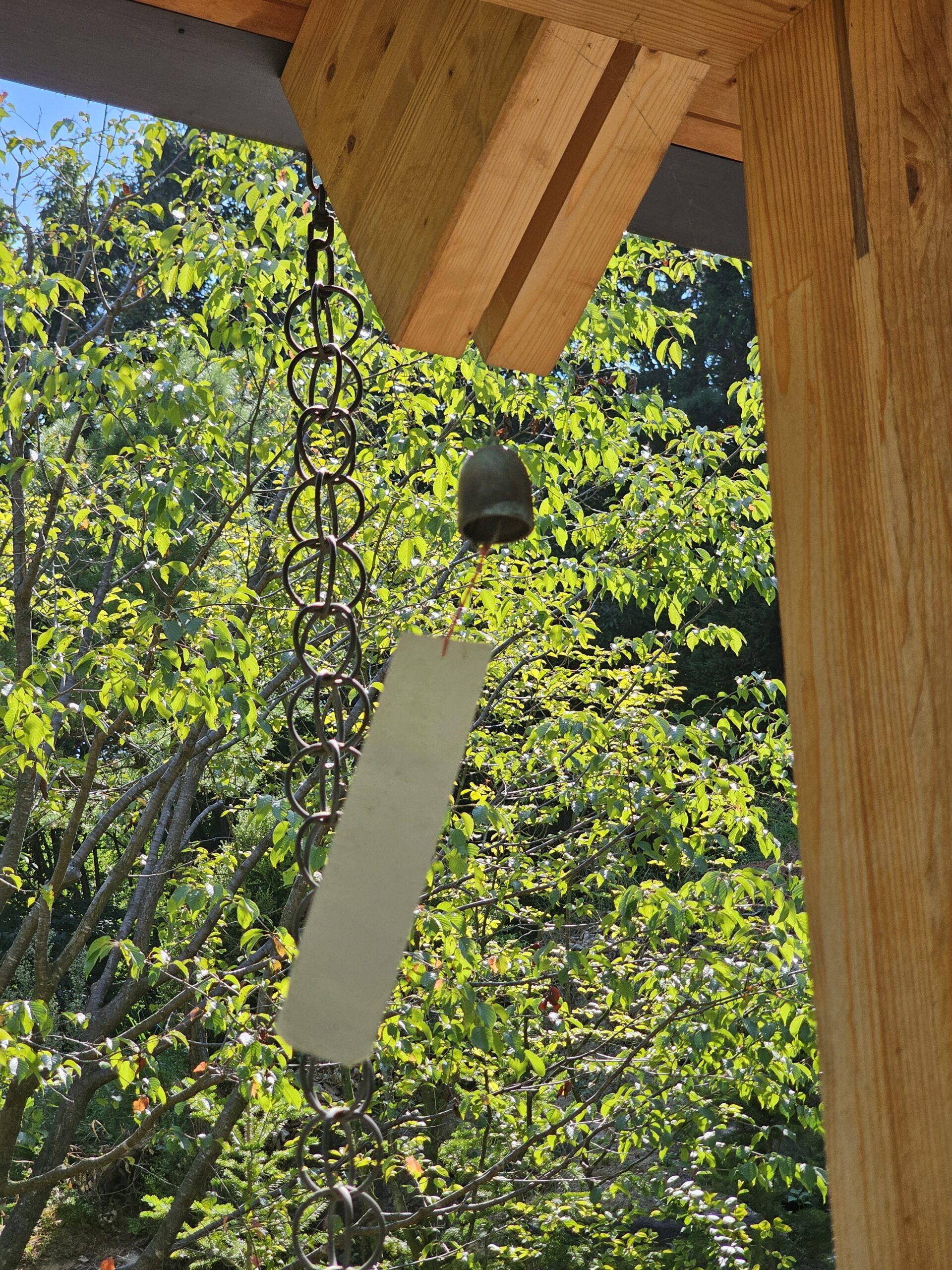
옥구정원은 모든 건축물과 정원이 느슨하게 연결되면서도 필요에 따라 독립성을 유지하도록 계획되었습니다. 내부와 외부는 명확히 나뉘지 않으며, 계절의 변화가 직접적으로 공간 경험에 스며든다. 봄의 새순, 여름의 짙은 녹음, 가을의 색 변화, 그리고 겨울의 정적까지—자연의 흐름이 빠짐없이 공간을 통과합니다. 이곳은 특정 계절에만 완성되는 장소가 아니라, 사계절 내내 다른 표정을 보여주는 리조트로 설계되었습니다.
옥구정원은 건축과 풍경, 재료와 시간, 인간과 자연의 관계를 조율하는 장기적 실험의 결과물입니다. 이 프로젝트는 하나의 건물을 짓는 작업이 아니라, 한 사람의 삶과 풍경이 함께 축적되는 환경을 만드는 과정입니다.
Okgud Garden in Yangpyeong is a private resort conceived for a single client, developed through a long-term master plan that carefully aligns personal sensibility with the surrounding natural landscape. The architect was involved from the earliest stage of selecting the site, allowing the design to grow out of an understanding of the land—its topography, views, and environmental context. As the site was gradually formed, the project evolved through continuous dialogue and on-site exploration with the client. This work began not from the idea of constructing a building, but from shaping a relationship between a person and the land.
1. Reinterpreting the Existing Factory Structure
An existing steel-framed factory building stood on the site. While the initial approach considered demolition and new construction, the first architectural proposal was to retain and reinterpret the structure. The steel frame was preserved, and one side of the former factory was reorganized into interior spaces including a private music hall and fitness area. Beneath the extended roof, a void-like open zone connects the entrance of Okgud Garden to its far end, functioning as a multipurpose space for rest, gathering, and transition between interior and exterior.
The exterior finish adopts a traditional Japanese wood-charring technique, producing a deep black tone formed through the act of burning. This material expression embodies both nature and human intervention, creating a new layer of “naturalness” shaped by time and process. Across the changing seasons, the black mass alternately recedes into the landscape or becomes its focal point. In winter, when color fades from the surroundings, the contrast between the snow-covered roof and the dark exterior intensifies the presence of the architecture, turning the structure into an iconic anchor within Okgud Garden.
2. The Earth-Embedded Pavilion
Walking uphill through the garden, a small pavilion emerges at the far end, appearing partially embedded in the ground. Its roof is composed of stone drawn from the site itself, allowing the building to read as an extension of the terrain rather than an object placed upon it. Stone—rarely used as a primary roofing material—was intentionally chosen, pushing against structural conventions and requiring careful integration with the supporting system.
The pavilion houses a fireplace and a private hot spring overlooking the entire garden. Designed for two users, the bathing space is primarily constructed from stone and copper, allowing traces of time and use to accumulate naturally. The interplay between heavy materials and intimate scale creates a space of strong presence despite its modest size.
3. Relationship with Nature
Throughout Okgud Garden, architecture and landscape are neither fully merged nor completely separated; they remain loosely connected, allowing moments of openness and privacy to coexist. Interior and exterior boundaries are intentionally softened so that seasonal changes become part of everyday spatial experience. Spring growth, summer density, autumn color, and winter stillness all pass directly through the site, continuously reshaping the atmosphere.
The garden is not designed for a single moment or season but as a place that reveals different identities over time. Okgud Garden is ultimately a long-term exploration of how architecture, landscape, material, and human life can be carefully aligned. Rather than a single building, it is an environment where personal memory, natural cycles, and spatial experience accumulate together.